Dagenham, United Kingdom
- 108,368 people
- 16 places to visit
- 51.5403, 0.1482
Places to Visit (16)
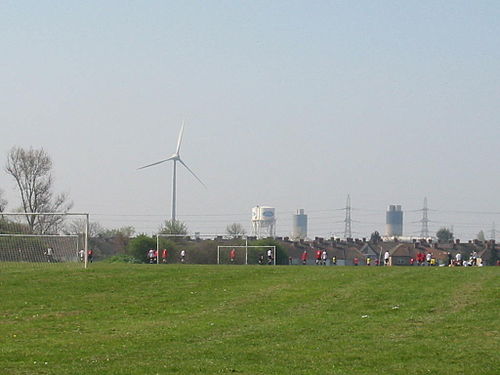
Dagenham is a town located in the East London borough of Barking and Dagenham, in the United Kingdom. Historically part of Essex, it became part of Greater London in 1965. The town lies on the River Rom, approximately 12 miles east of Central London. It is primarily known for its residential communities, industrial history, and its role in the Ford Motor Company's manufacturing operations, which significantly influenced its economic development in the 20th century. The construction of the Ford plant in the 1920s marked Dagenham as a key player in the automotive industry, making it one of the largest car manufacturing sites in Europe. This industrial legacy not only provided numerous jobs but also shaped the demographic and economic landscape of the area.
In addition to its industrial background, Dagenham has a rich history that dates back to the 12th century, when it was primarily a rural area consisting of agrarian communities. Over the years, Dagenham transformed into a suburban area with significant growth occurring post-World War II, largely due to an influx of families moving to the area. Today, Dagenham features a mix of housing, parks, and cultural amenities, including the Dagenham Market, which is a popular shopping destination. The town is also home to numerous educational institutions and recreational facilities. In terms of transport, Dagenham is well-connected by the London Underground, with the District Line serving the area as well as various bus routes that provide easy access to central London and surrounding boroughs.
Dagenham's community is diverse, reflecting the broader multicultural environment of London. The borough has made efforts to improve local amenities and public spaces, aiming to enhance the quality of life for its residents. Recent redevelopment projects have focused on housing, shopping, and community services, indicating a commitment to reinvesting in this historically significant area. While retaining its industrial roots, Dagenham continues to evolve, balancing the needs of a modern urban population with the preservation of its heritage.
Facts about Dagenham
- Dagenham was historically known for its extensive Ford Motor Company plant, which played a significant role in the British automotive industry and shaped the local economy for much of the 20th century.
- The Dagenham Assembly Plant, opened in 1931, was one of the largest car manufacturing plants in Europe and produced millions of vehicles until its closure in 2002.
- In 1968, Dagenham became a focal point of the women's rights movement in the UK when female workers at the Ford plant went on strike for equal pay, leading to the landmark Equal Pay Act of 1970.
- Dagenham has a rich history that dates back to the Domesday Book of 1086, where it was recorded as 'Dagingeham'.
- The area is home to the largest public outdoor space in East London, the 800-acre Eastbrookend Country Park, which features diverse wildlife and walking trails.
- Dagenham was a part of the historic Barking and Dagenham borough, officially established in 1965 and recognized for its efforts in community development and regeneration.
- The Chadwell Heath area of Dagenham has a strong cultural heritage, particularly known for its ties to the East End of London and its vibrant community.
- Dagenham has several notable landmarks, including the historic St. Peter's Church, which dates back to the 12th century and is one of the oldest buildings in the area.
- The town is also home to the Rainham Marshes, a Site of Special Scientific Interest that provides rich habitats for various bird species and is a popular spot for nature enthusiasts.
- Dagenham's population is culturally diverse, reflecting a mixture of communities and ethnic backgrounds, contributing to its unique social fabric.