Dakhla, Western Sahara
- 75,000 people
- 6 places to visit
- 23.7221, -15.9347
Places to Visit (6)
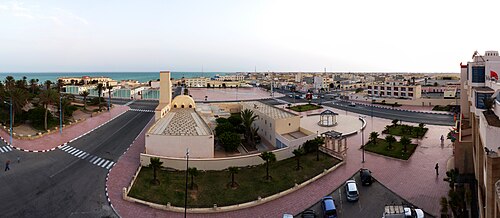
Dakhla is a coastal city located in the disputed territory of Western Sahara, which has been a focal point of regional and international tensions since Spain withdrew in 1975. The city is positioned on a narrow peninsula extending into the Atlantic Ocean, approximately 550 kilometers south of Laayoune, the largest city in Western Sahara, and about 300 kilometers north of the Mauritanian border. Historically referred to as "Villa Cisneros," a nod to its Spanish colonial past, Dakhla has developed into a hub for fishing, tourism, and maritime activities. The natural beauty of the surrounding landscapes, combined with its favorable climate and wind conditions, has transformed Dakhla into a popular destination for water sports enthusiasts, particularly windsurfers and kitesurfers.
Economically, Dakhla benefits from its strategic location and is heavily reliant on its fishing industry, which is among the most productive in the region due to the nutrient-rich waters of the Atlantic Ocean. The local economy has diversified in recent years, with efforts to boost tourism and develop infrastructure. The area boasts several resorts and hotels catering to both adventure tourism and eco-tourism, capitalizing on its scenic beaches and unique ecosystems, including the Dakhla lagoon, which is home to diverse marine life and bird species. Despite its economic potential, Dakhla's status remains contentious. Morocco claims sovereignty over the entire territory of Western Sahara, while the Sahrawi Arab Democratic Republic (SADR), which operates from exile, seeks independence. This political situation influences not only governance but also the broader economic and social dynamics within the city.
Dakhla's cultural landscape is shaped by a blend of indigenous Sahrawi, Moorish, and Spanish influences, reflecting its complex historical narrative. The city hosts various cultural events that celebrate this diversity, showcasing traditional music, art, and gastronomy. Nevertheless, the ongoing political conflict poses challenges to the development and stability of the region, impacting human rights and the living conditions of its inhabitants. The local population lives amidst a backdrop of geopolitical tension, with many advocating for self-determination and resolution to the long-standing disputes surrounding Western Sahara. As international attention continues to focus on the issue, Dakhla remains a symbol of both hope and complexity, representing the aspirations of its people amid the broader struggles for recognition and autonomy.
Facts about Dakhla
- Dakhla is located on a narrow peninsula that juts into the Atlantic Ocean, giving it a unique geographical position in Western Sahara.
- The city was formerly known as Villa Cisneros, named after a Spanish explorer, which reflects its colonial history.
- Dakhla boasts some of the best windsurfing and kitesurfing spots in the world, attracting enthusiasts from around the globe.
- The city hosts the annual Dakhla Festival, which promotes traditional Sahrawi culture through music, dance, and art.
- Dakhla is home to a significant fishing industry, especially for octopus, making it an important economic center in Western Sahara.
- The Dakhla Oasis, located nearby, is known for its date palm trees and serves as a vital agricultural area in the desert.
- It has a rapidly growing tourism sector, with eco-tourism and adventure tourism becoming increasingly popular.
- Dakhla features the Dakhla port, which is a crucial hub for maritime trade and transportation in the region.
- The area is known for its rich marine biodiversity, attracting researchers and conservationists interested in studying its unique ecosystem.
- Dakhla has been a focal point in the international discussion regarding the territorial disputes in Western Sahara, highlighting its strategic importance.