Damascus, Syria
- 1,569,394 people
- 13 places to visit
- 33.5132, 36.2768
Places to Visit (13)
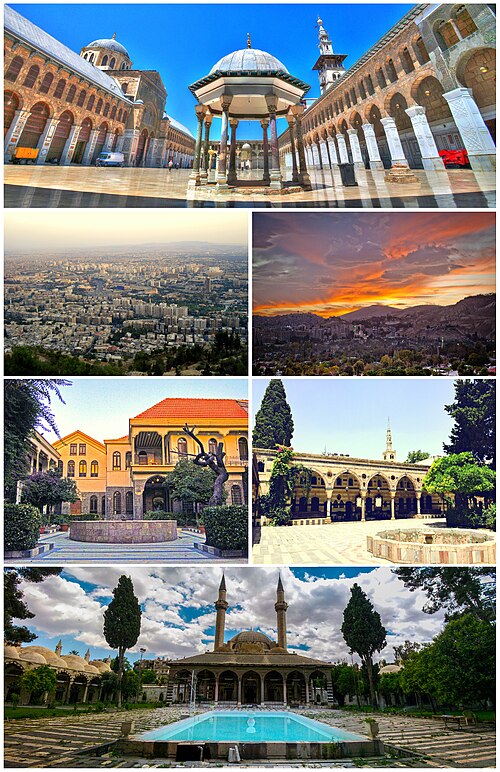
Damascus, the capital of Syria, is one of the oldest continuously inhabited cities in the world, with its history dating back over 11,000 years. Positioned within the Barada River valley, surrounded by the Anti-Lebanon mountain range, it has acted as a crucial cultural and commercial center throughout its extensive history. The city has witnessed the rise and fall of various empires and dynasties, including the Arameans, Romans, and Umayyads. Its strategic location facilitated trade between the East and West, making it a melting pot of diverse cultures, religions, and traditions. Damascus became the capital of the Islamic Caliphate under the Umayyads in the 7th century, further enhancing its significance as a political and religious center.
The Old City of Damascus, designated a UNESCO World Heritage site, is characterized by its rich architectural heritage, with stunning examples of Islamic, Byzantine, and Ottoman design. Among its notable sites are the Umayyad Mosque, one of the largest and oldest mosques in the world, and the vibrant Souq al-Hamidiyah, a traditional market that showcases local crafts and goods. Despite its historical significance, Damascus has faced numerous challenges in the modern era, especially since the outbreak of the civil war in 2011, which has caused extensive damage and a humanitarian crisis. The conflict has disrupted the city’s social fabric and economy, leading to significant population displacement. Today, as Syria slowly moves toward recovery, Damascus remains a symbol of resilience, with its historical legacy and cultural richness standing in stark contrast to the present struggles, embodying the complexities of a city that has endured for millennia.
Facts about Damascus
- Damascus is one of the oldest continuously inhabited cities in the world, with evidence of settlement dating back over 11,000 years.
- The city is renowned for its historic sites, including the Umayyad Mosque, which is considered one of the largest and oldest mosques in the world.
- Damascus served as the capital of the Umayyad Caliphate from 661 to 750 AD, making it a significant political and cultural center in early Islamic history.
- The city is famous for its traditional handicrafts, particularly the production of damask fabric, which originated here and is known for its intricate patterns.
- The Old City of Damascus is a UNESCO World Heritage Site, recognized for its historical significance and well-preserved architectural features.
- The Straight Street, known as 'Via Recta', is a significant ancient road in Damascus that has been mentioned in various historical texts, including the Bible.
- Damascus is often referred to as the 'City of Jasmine' due to the abundance of jasmine flowers that once thrived in the city, symbolizing its lushness and beauty.
- The city has a rich culinary heritage, famous for dishes such as kibbeh and tabbouleh, distinguishing its flavors from other regional cuisines.
- Damascus is home to the National Museum, which houses a vast collection of artifacts, including treasures from the ancient civilizations of Syria.
- The city played a pivotal role in the historical Silk Road trade routes, connecting it to various cultures and economies across Asia and the Mediterranean.