Debre Birhan, Ethiopia
- 146,900 people
- 9.6767, 39.533
No places available for this city.
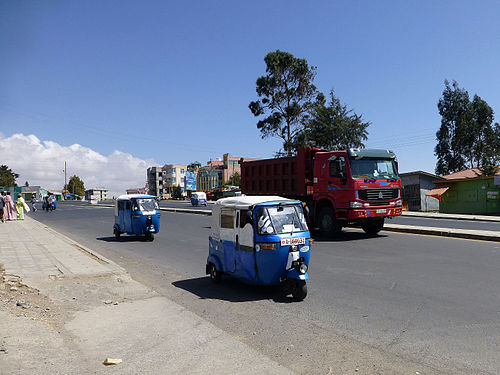
Debre Birhan is a city located in the central part of Ethiopia, specifically in the Amhara region. Situated at an elevation of approximately 2,840 meters (9,318 feet) above sea level, it ranks as one of the highest large settlements in Africa. The city is founded on a rich historical backdrop, initially established in 1456 by Emperor Zara Yaqob as a strategic military and administrative center. Over the centuries, it has evolved both in importance and population, serving as a vital hub during various political shifts in the Ethiopian empire. Debre Birhan's history is intertwined with the traditions and narratives of Ethiopia, particularly through its association with the Orthodox Christian Church and numerous historical churches that showcase the region's cultural heritage.
Economically, Debre Birhan has developed into an important center for trade and agriculture, largely due to its strategic location along vital transportation routes. The surrounding area is known for its fertile lands, allowing for the cultivation of crops such as barley, wheat, and teff, which are staples in Ethiopian cuisine. In recent years, the growth of the manufacturing sector has also been noticeable, with businesses emerging in textiles and construction materials, contributing to the city's economic diversification. The local government aims to further enhance Debre Birhan’s infrastructure, making it more accessible and attractive for investment, which is essential for its continued development.
Culturally, Debre Birhan is bustling with local traditions and customs that reflect the diverse heritage of Ethiopia. The city hosts various festivals and religious events, drawing in visitors and pilgrims from across the country, particularly to its historic churches, some of which date back to the 15th century. Moreover, its highland location offers stunning views and a unique climate, making it a desirable location for residents and travelers alike. The community is characterized by a blend of ethnicities and languages, predominantly Amharic speakers, contributing to its rich cultural tapestry. As the city continues to grow and modernize, Debre Birhan remains a place where ancient heritage and contemporary life coalesce, echoing the broader narrative of Ethiopia's history and ongoing evolution.
Facts about Debre Birhan
- Debre Birhan was founded in the 15th century and served as a significant historical and religious center in Ethiopia.
- The city is situated at an altitude of approximately 2,840 meters (9,300 feet), making it one of the highest cities in Ethiopia.
- Debre Birhan is known for its production of traditional handwoven textiles, particularly 'Netela', an essential cultural attire in Ethiopia.
- The city's name translates to 'Mountain of Light,' reflecting its scenic location and historical importance as a royal settlement.
- Debre Birhan is home to the ancient Debre Birhan Selassie Church, famous for its unique frescoes and traditional Ethiopian architecture.
- In the 19th century, the city became a key military base during the campaigns of Emperor Menelik II against Italian colonial forces.
- Debre Birhan hosts the annual Meskel Festival, celebrating the finding of the True Cross, drawing visitors from various backgrounds.
- The city has developed into a notable educational hub, hosting a branch of the Ethiopian Civil Service University and other institutions.
- Debre Birhan has played a significant role in local agriculture, particularly in the production of barley, wheat, and other grains due to its favorable climate.
- The city is strategically located on the way to the northern historical routes of Ethiopia, providing access to important archaeological and cultural sites.