Deir ez-Zor, Syria
- 271,800 people
- 3 places to visit
- 35.3319, 40.1243
Places to Visit (3)
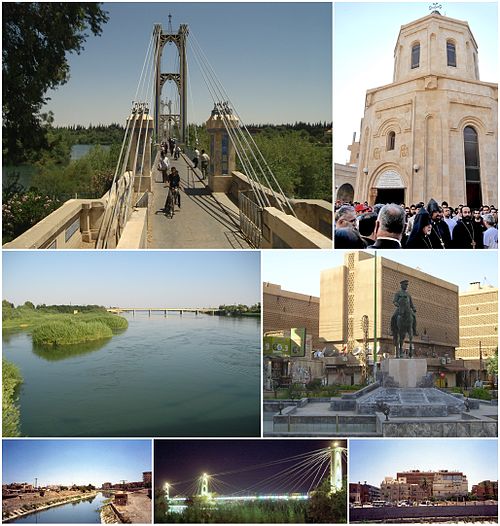
Deir ez-Zor is a significant city in eastern Syria, situated along the banks of the Euphrates River. It serves as the capital of the Deir ez-Zor Governorate and is the largest city in the region, known for its strategic location and historical importance. The city's population is diverse, primarily consisting of Arabs and Kurds, with a mixture of other ethnic and religious communities. Historically, Deir ez-Zor has been a center for agriculture and trade, benefiting from the fertile lands along the river and its position on ancient trade routes connecting Mesopotamia and the Mediterranean.
In recent history, Deir ez-Zor has been heavily impacted by the Syrian civil war, which began in 2011. It has seen intense fighting between various factions, including government forces, the Islamic State (ISIS), and Kurdish forces. The city witnessed a significant battle in 2017, when Syrian government troops and allied forces made a concerted effort to retake Deir ez-Zor from ISIS, which had controlled large parts of the city and the surrounding region. The conflict has resulted in substantial destruction to infrastructure and a humanitarian crisis, with many residents displaced and access to basic services severely hampered.
Despite the challenges, Deir ez-Zor continues to hold economic potential due to its resources, including oil fields that were historical assets before the rise of ISIS. While the region remains unstable, there have been efforts for reconstruction and revitalization. The local population is gradually returning, and the government is working on restoring order and rebuilding the economy. However, ongoing tensions and the presence of various military forces complicate the situation, making Deir ez-Zor a focal point of political and military interest in post-war Syria. The city's future remains uncertain, but its rich heritage and strategic advantages indicate that it will play a vital role in the region’s dynamics moving forward.
Facts about Deir ez-Zor
- Deir ez-Zor is located along the Euphrates River and is known as a vital trade and transportation hub in eastern Syria.
- The city has a significant historical context, being one of the oldest continuously inhabited cities in the world, with its roots dating back to ancient Mesopotamia.
- Deir ez-Zor is famous for the Deir ez-Zor Bridge, which was a strategic point during the Syrian Civil War and has been rebuilt multiple times.
- It was heavily affected by the rise of ISIS, which declared the city as part of its caliphate in 2014, marking it as a focal point in the conflict.
- The city is home to the Deir ez-Zor Museum, which features artifacts from the surrounding ancient civilizations, showcasing its rich cultural heritage.
- Deir ez-Zor has been a key center for the oil industry in Syria, contributing significantly to the nation’s economy before the civil conflict disrupted operations.
- The Syrian Army's Siege of Deir ez-Zor, which lasted from 2014 to 2017, was one of the longest sieges in modern history, leading to severe humanitarian crises.
- Deir ez-Zor has a mixed population of Arabs, Kurds, and other ethnic groups, making it a culturally diverse region within Syria.
- The city is known for its distinctive architecture, including Ottoman-era mosques and traditional Syrian houses, setting it apart from many other cities in Syria.
- Deir ez-Zor is surrounded by agricultural land, particularly for wheat and barley, and is considered part of Syria's 'breadbasket' region.