Delmenhorst, Germany
- 75,893 people
- 5 places to visit
- 53.0522, 8.6356
Places to Visit (5)
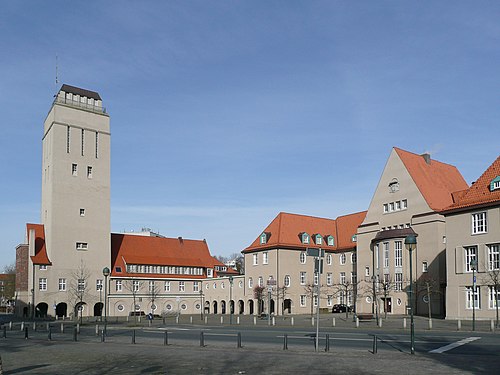
Delmenhorst is a city located in Lower Saxony, Germany, positioned approximately 10 kilometers northwest of Bremen. With a population of around 30,000 residents, it serves as an essential urban center within the region. The city's historical roots date back to the 12th century, and it gained official town status in 1855. Delmenhorst has a rich industrial heritage, having evolved significantly during the 19th and early 20th centuries, particularly with the rise of the textile and manufacturing industries. Although these sectors have diminished over time, Delmenhorst has adapted, now focusing on services, commerce, and public administration.
The city's architecture reflects its historical development, with various buildings from different periods, including modern structures and post-war designs. Notable sites include the St. John's Church (Johanneskirche), which features striking neo-Gothic elements, and the impressive Delmenhorst Castle, which once served as the residence of the counts of Delmenhorst. The city is also tied to the cultural heritage of the region, hosting events like the Delmenhorster Weihnachtsmarkt, a popular Christmas market that attracts visitors each year.
Delmenhorst's location offers excellent connectivity, with well-developed transportation links, including roads and railway services that facilitate easy access to Bremen and beyond. The local economy benefits from this proximity, as many residents commute to Bremen for work while also engaging in Delmenhorst's expanding service sector. The city is also dedicated to promoting green spaces and recreational areas, such as the lush parks along the waterways, enhancing the quality of life for its inhabitants. With a blend of historical significance and modern development, Delmenhorst continues to thrive as a vibrant community in Lower Saxony.
Facts about Delmenhorst
- Delmenhorst is known for its historical significance in the industrial development of the 19th century, particularly in brick and clay industries.
- The city was once home to the renowned 'Delmenhorster Moor,' which served as a significant peat extraction area in Germany.
- Delmenhorst features the impressive Wasserturm, a water tower built in 1905 that symbolizes the city's industrial heritage and is now a prominent landmark.
- The city hosts the annual 'Delmenhorster Stadtfest,' a popular event that celebrates local culture, music, and cuisine, attracting visitors from across the region.
- Delmenhorst was historically connected to the 'Oldenburger Tor,' a unique medieval gate structure that once marked the entrance to the city and is now a historical site.
- The city has a distinctive blend of modern architecture and historic buildings, showcasing its evolution and growth over centuries.
- Delmenhorst is part of the 'Bundesstadt Bremen,' creating a unique political and economic relationship with Bremen, which is just a short distance away.
- The town features the largest hospitium in Germany dedicated to artists, established in the 1990s, fostering artistic talent and community engagement.
- Delmenhorst is notable for its large public parks, including the 'Stadtpark' and 'Hermann-Böse-Park,' which offer green spaces for recreation and community events.
- The city has a rich musical heritage and is home to several traditional choirs and orchestras that perform in various venues across the area.