Dessau, Germany
- 67,747 people
- 11 places to visit
- 51.8308, 12.2423
Places to Visit (11)
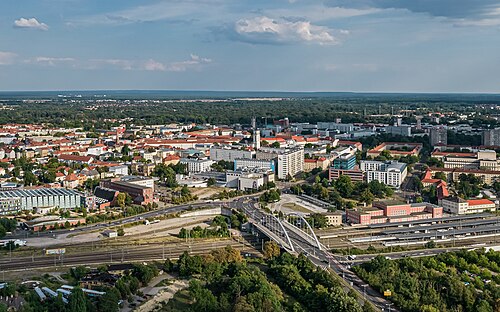
Dessau is a city located in the federal state of Saxony-Anhalt, Germany, situated along the banks of the River Mulde. With a population of approximately 80,000 residents, Dessau serves as an important center of culture, history, and education. The city gained prominence in the late 19th and early 20th centuries as a hub for various artistic movements, particularly during its association with the Bauhaus school. Founded in 1919 by architect Walter Gropius, the Bauhaus sought to unify art and technology, and its presence in Dessau has left an enduring legacy, with several buildings designed by prominent architects of that era still standing today.
Among Dessau's architectural highlights is the iconic Bauhaus Dessau building, which is a UNESCO World Heritage site and a key representation of modernist design. This site, along with the nearby Masters' Houses, reflects the innovative spirit of the Bauhaus movement and attracts visitors from around the globe. Additionally, the city is known for its parks and gardens, such as the Dessau-Wörlitz Garden Realm, another UNESCO World Heritage site, which showcases a blend of English and Italian landscape design. In terms of industry, Dessau has a history of manufacturing and innovation, particularly in the areas of machine construction and chemical production, contributing to its economic development over the years.
Culturally, Dessau hosts various events and institutions dedicated to the arts and education, including museums and galleries that celebrate both its historical significance and contemporary creativity. The city also benefits from its excellent transportation links, making it easily accessible from larger cities like Leipzig and Berlin. Overall, Dessau embodies a rich tapestry of historical significance, artistic achievement, and cultural vibrancy, making it a unique and engaging destination in Germany.
Facts about Dessau
- Dessau is known for its association with the Bauhaus movement, having been the site of the Bauhaus school founded by Walter Gropius in 1919.
- The Bauhaus Dessau Foundation operates in the iconic Bauhaus building designed by Gropius, which is a UNESCO World Heritage site.
- Dessau is home to the Dessau-Wörlitz Garden Realm, a UNESCO World Heritage site that features stunning gardens, parks, and buildings designed in the 18th century.
- The city is famous for its historic architecture, including the Dessau central market hall and the elegant Art Nouveau buildings throughout the city.
- Dessau is the birthplace of the Swiss composer Paul Hindemith, who was instrumental in 20th-century music.
- The city played a significant role in aviation history with the establishment of the Dessau Technical Institute, which contributed to aircraft design and engineering.
- The famous Bauhaus Dessau building has been renovated and serves as a cultural hub, hosting various events that celebrate modernist architecture and design.
- During the Weimar Republic, Dessau was a center for progressive arts and education, fostering innovation in various disciplines.
- Dessau features the iconic Kornhaus, a restaurant on the banks of the Elbe River, noted for its modern architecture and culinary offerings.
- The annual Dessau Music Festival showcases diverse musical talents and reflects the city's vibrant cultural scene.