Dezhou, China
- 679,535 people
- 10 places to visit
- 37.4355, 116.3593
Places to Visit (10)
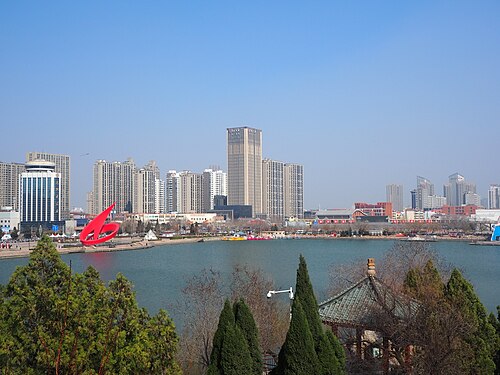
Dezhou is a vibrant city located in the northwestern part of Shandong Province, China. It serves as the administrative center of Dezhou Prefecture and is known for its rich cultural heritage and historical significance. The city's history dates back over 2,000 years, with its establishment during the Han Dynasty. Historically, Dezhou has been prominent for its role as a transportation hub, linking central and northern China, which contributed to its economic growth and cultural exchanges over the centuries. Today, it boasts a population of around 2.5 million residents, combining urban and rural communities that offer a glimpse into both modern Chinese life and traditional practices.
Modern Dezhou is celebrated for its advancements in solar energy technology, earning the nickname "Capital of Solar Energy" due to its extensive use and production of solar power devices. This emphasis on renewable energy is reflected in various sectors of the city's economy, which also includes agriculture, textiles, and food processing. Dezhou is particularly famous for its agricultural products, including wheat, corn, and fruits, which are enriched by the city's favorable climate and fertile soil. Tourists and locals alike appreciate the culinary offerings, notably the renowned Dezhou Braised Chicken, a dish that has gained national fame. The city also features several cultural landmarks, such as the Dezhou Confucius Temple and the distinctive Yangtze River Forest Park, along with the historic site of the Dezhou City God Temple. Dezhou is a unique blend of tradition and innovation, making it a notable city in China's rapidly developing landscape.
Facts about Dezhou
- Dezhou is known as the 'Hometown of the Chinese Yellow River', emphasizing its proximity to this significant waterway and its impact on local agriculture and culture.
- The city is famous for its Dezhou Braised Chicken, a traditional dish recognized throughout China and often featured in culinary tourism.
- Dezhou is home to the world’s largest solar thermal power demonstration project, reflecting its commitment to renewable energy and innovation.
- The city boasts historical significance, having been an important military and trading site during various dynasties, particularly in the Tang and Song dynasties.
- Dezhou has a unique architectural feature, the ancient Everbright Pavilion, which showcases the city's rich architectural history and attracts many visitors.
- The city hosts the Dezhou International Kite Festival each year, attracting kite enthusiasts from all over the world, distinguishing it as a center for kite flying.
- Dezhou has a notable historical figure, Yan Fu, an influential thinker, and translator during the late Qing Dynasty, contributing to the introduction of Western philosophies in China.
- The local Dezhou Calligraphy Institute promotes traditional Chinese calligraphy, and the city is often regarded as a hub for calligraphy education.
- Dezhou is one of the few cities in China with a large population of the Muslim Hui ethnic group, contributing to the cultural diversity and culinary landscape of the area.
- The construction of the Dezhou Railway in the early 20th century marked it as a key transport hub, integrating the city further into China's national economic framework.