Dimitrovgrad, Bulgaria
- 38,015 people
- 42.0545, 25.5945
No places available for this city.
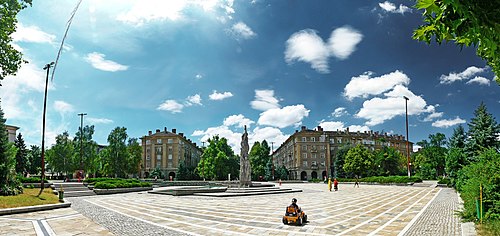
Dimitrovgrad is a prominent city located in the southern part of Bulgaria, within Haskovo Province. Established in 1947, it was initially called a "new town" due to its planned development which aimed to support the industrial expansion of the region. The city was named in honor of Georgi Dimitrov, a notable Bulgarian Communist leader and a prominent figure in the international communist movement. Dimitrovgrad's establishment coincided with a period of significant socio-economic transformation in Bulgaria, with a strong focus on industry and urbanization. Its strategic location at the crossroads of important roads made it an ideal hub for transportation and trade.
The city has a diverse demography that reflects the broader cultural richness of Bulgaria. With a population of around 30,000 inhabitants, Dimitrovgrad is known for its mix of ethnicities, including Bulgarians, Roma, and a smaller number of Turkish and Armenian communities. The city exhibits a variety of architectural styles that ranging from socialist realism to modern structures, showcasing its historical evolution. Dimitrovgrad is famous for its industrial facilities, particularly in the chemical and machine-building sectors, contributing significantly to the local economy. Alongside its industrial base, the city is also known for its educational institutions, healthcare services, and cultural initiatives, which promote various artistic expressions and community activities.
Natural beauty surrounds Dimitrovgrad, with the picturesque landscape of the Rhodope Mountains to the south and fertile plains that support agriculture around the city. The region's climate is characterized by hot summers and mild winters, which allows for diverse agricultural production. The nearby river Maritsa adds to the scenic charm of the area, providing recreational opportunities for the residents. Dimitrovgrad continues to develop as a regional center, balancing its industrial roots with community engagement and cultural development, while also preserving the natural environment that enhances the city’s appeal.
Facts about Dimitrovgrad
- Dimitrovgrad was founded in 1947 and named after the Bulgarian Communist leader Georgi Dimitrov, making it one of the youngest cities in Bulgaria.
- It is notable for its modernist architecture, which reflects the socialist architecture trends of the mid-20th century.
- The city was developed as an industrial center and played a significant role in Bulgaria's post-World War II economic recovery.
- Dimitrovgrad is known for its extensive green spaces and parks, particularly the 'Pioneer Park', which promotes community engagement and outdoor activities.
- The city hosts an annual 'Petrichka' festival, celebrating traditional Bulgarian culture with music, dance, and crafts, distinguishing it from other urban celebrations in Bulgaria.
- Dimitrovgrad is strategically located near the Maritsa River, providing it with unique natural landscapes and opportunities for water-based recreation.
- The city has a diverse population, including a mix of ethnic communities, which contributes to its multicultural atmosphere.
- Dimitrovgrad is in proximity to several archaeological sites, including the ancient Thracian city of Perperikon, enriching its historical significance.
- The city has a strong emphasis on education, with several specialized high schools, making it a regional hub for students seeking technical and vocational training.
- Dimitrovgrad is home to the 'Ivan Vazov' National Theater, which showcases a variety of performances and contributes to the city's cultural life.