Donetsk, Ukraine
- 901,645 people
- 11 places to visit
- 48.0159, 37.8029
Places to Visit (11)
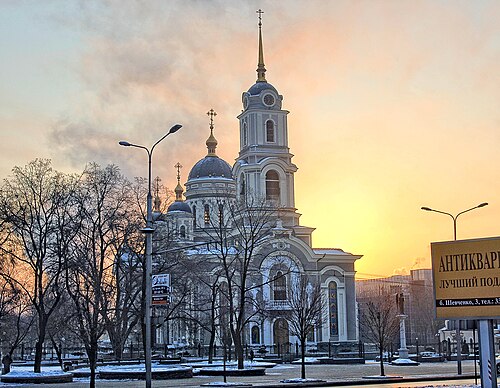
Donetsk, a major city in eastern Ukraine, is located in the Donetsk Oblast and serves as a vital industrial center for the region. Founded in the late 19th century by the Welshman John Hughes, who established iron and coal mills, the city quickly transformed into a hub for heavy industry, particularly coal mining and steel production. By the early 21st century, Donetsk had developed a diverse economy, incorporating sectors such as machinery, energy, and manufacturing. Historically known for its significant Russian-speaking population, the city has been shaped by its industrial roots and the cultural influences of both Ukrainian and Russian heritage.
In recent years, Donetsk has been at the center of conflict following Ukraine's 2014 Euromaidan protests and the subsequent Russian annexation of Crimea. This unrest escalated into an armed conflict between Ukrainian forces and separatist groups in the Donbas region, which includes Donetsk and Luhansk. The city became the focal point of a self-proclaimed republic, the Donetsk People's Republic (DPR), leading to widespread destruction and significant displacement of the local population. As a result, much of the city’s infrastructure and economy faced severe setbacks, and it became difficult for residents to access basic services, including healthcare and education.
Today, Donetsk remains a focal point of geopolitical tensions in the region. While the DPR claims independence, the Ukrainian government considers it to be under occupation. The ongoing conflict has resulted in a complex humanitarian crisis, with many residents caught in the crossfire of military actions. Despite these challenges, parts of the city continue to exhibit resilience, with local governance structures and community organizations attempting to address the needs of the population. Donetsk’s rich history, combined with its current socioeconomic struggles, presents a unique narrative within the broader context of Ukraine’s ongoing conflict and a constantly evolving landscape.
Facts about Donetsk
- Donetsk was founded in 1869 as a coal mining town under the name Yuzovka, named after Welsh engineer John Hughes.
- The city is known for its significant role in the industrial sector, particularly in coal mining and steel production, earning it the nickname 'the coal capital of Ukraine.'
- Donetsk is home to the Donetsk Neurosurgery Institute, renowned for its advancements in neurosurgery and medical research, attracting patients from across Ukraine and beyond.
- The city features the Donetsk National Academic Opera and Ballet Theatre, which is one of the leading cultural institutions in Ukraine and hosts various high-profile performances.
- Donetsk's landscape is marked by the Donets River, and the area features numerous parks and green spaces, including Shcherbakov Park, known for its recreational activities.
- The city was the site of significant political and social unrest during the 2014 Ukrainian revolution and subsequent conflict in Eastern Ukraine, impacting its demographics and economy.
- Donetsk is also known for its football culture, with FC Shakhtar Donetsk being one of the most successful football clubs in Ukraine, which has won multiple league titles and competed in European tournaments.
- The Museum of Local History in Donetsk showcases the city's rich history, including exhibits related to its industrial heritage and cultural developments.
- Donetsk has a unique urban infrastructure that includes grand Soviet-era architecture, giving the city a distinct character compared to other Ukrainian cities.
- The city has a diverse population with a mix of ethnic Ukrainians and Russians, contributing to a unique cultural blend, particularly in language and traditions.