Douai, France
- 46,531 people
- 13 places to visit
- 50.3679, 3.0806
Places to Visit (13)
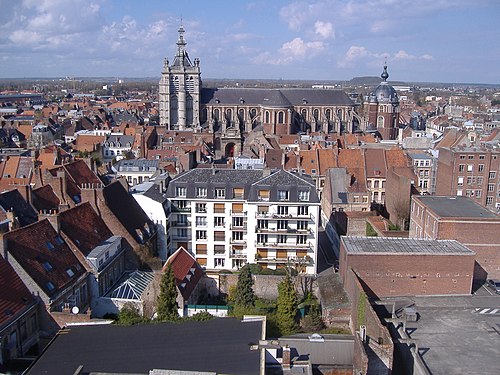
Douai is a city located in the northern part of France, specifically in the Hauts-de-France region. Situated along the Scarpe River, it serves as the capital of the arrondissement of Douai and is approximately 30 kilometers southeast of Lille. With a rich history dating back to the Roman Empire, Douai was originally known as "Civitas Duacorum." Throughout the Middle Ages, it became an important center for textiles and coal mining, contributing significantly to the local economy. The city’s strategic position made it a key fortified settlement, especially during the conflicts of the 16th and 17th centuries, including the Thirty Years' War and the Franco-Dutch Wars.
The architectural landscape of Douai is a testament to its historical significance, featuring notable buildings such as the Douai Town Hall, a stunning example of the local Renaissance style. The city's Beffroi, a UNESCO World Heritage site, stands as a symbol of its medieval past and civic pride. Douai is also home to several educational institutions, including the University of Douai, which was founded in the 16th century and became a vital center for law and humanities. The city’s vibrant cultural scene is highlighted by events and festivals, including the famous "Fête de la Saint-Jean." Douai's population, which is just over 40,000 residents, benefits from a well-developed transportation network, linking it to major cities in the region. As such, Douai represents a blend of historical richness and modern development, characterized by its rich cultural heritage, education, and community spirit.
Facts about Douai
- Douai is renowned for its historical University of Douai, founded in 1559, which played a significant role in the education of many influential figures, including several bishops and cardinals.
- The city is home to the impressive Douai Cathedral, also known as Saint-Pierre Cathedral, which showcases a mix of Gothic and Neoclassical architecture and serves as a prime example of the city’s rich architectural heritage.
- Douai has a unique legacy related to the English Catholic community, being the site where the Douai-Rheims Bible was produced in the late 16th century, providing the first complete Catholic translation of the Bible into English.
- The city is famous for its annual 'Fête de la Saint-Éloi', celebrating the patron saint of goldsmiths, which features colorful parades, music, and traditional local recipes.
- Douai has a distinct connection to the coal mining industry and was historically part of the Nord-Pas-de-Calais coalfield, impacting its economy and culture significantly until the decline of mining in the late 20th century.
- The local museum, the Musée de la Chartreuse, is set in a former Carthusian monastery and boasts a collection of fine arts, including works by local artists and national contemporaries, making it a cultural hub.
- Douai's architecture is characterized by its 'Belfry of Douai', a UNESCO World Heritage site that stands as a symbol of municipal power and represents the unique civil architecture of the region.
- The city was significantly impacted during both World Wars, leading to extensive reconstruction efforts that transformed its urban landscape and preserved many historical monuments.
- Douai hosts the annual 'Douai en fête' festival, which showcases local crafts, food, and entertainment, reflecting the city's vibrant community spirit and regional traditions.
- The nearby Canal de la Sensée, which runs through Douai, was an essential transportation route during the industrial era, promoting trade and shaping the area's economic development.