Dublin, Ireland
- 1,024,027 people
- 18 places to visit
- 53.3498, -6.2603
Places to Visit (18)
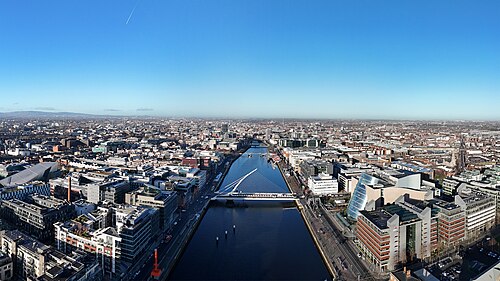
Dublin, the capital and largest city of Ireland, is located on the eastern coast of the country along the banks of the River Liffey. With a population of over 1.3 million in the Greater Dublin Area, it serves as the economic, cultural, and political hub of Ireland. Founded by the Vikings in the 9th century, the city has evolved through centuries of history, including periods of significant conflict and transformation, such as English conquest and the struggle for independence in the early 20th century. Dublin's historical architecture is a blend of medieval buildings and modern designs, with notable landmarks including Dublin Castle, St. Patrick's Cathedral, and the Georgian-style houses that line streets like Merrion Square. The city has earned a reputation as a UNESCO City of Literature, home to famous literary figures such as James Joyce, Samuel Beckett, and W.B. Yeats.
Dublin's vibrant culture is reflected in its numerous theatres, pubs, and artistic venues. The city hosts events like the Dublin Theatre Festival and the Bloomsday celebrations, honoring Joyce's landmark novel "Ulysses." The city's nightlife is equally notable, characterized by traditional Irish music and lively pubs, particularly in areas like Temple Bar. Dublin has also established itself as a global technology hub, attracting major companies, including Google, Facebook, and Twitter, which have set up their European headquarters in the city. This economic growth has led to a diverse population, with many residents coming from various cultural backgrounds, creating a cosmopolitan atmosphere. Additionally, Dublin boasts a variety of parks and green spaces, such as Phoenix Park, one of the largest walled city parks in Europe, providing a welcome escape from urban life.
Overall, Dublin is a city that harmoniously blends its rich historical heritage with modern innovation. The combination of its cultural significance, economic dynamism, and friendly atmosphere makes it a popular destination for tourists and a focal point for business and education in Ireland. The city's continued evolution is evident as it balances tradition with the demands of contemporary urban life, ensuring that Dublin remains a vibrant and thriving capital.
Facts about Dublin
- Dublin is the capital and largest city of Ireland, known for its significant historical and cultural heritage.
- The Book of Kells, a beautifully illustrated manuscript dating back to the 9th century, is housed at Trinity College Dublin, one of the city's oldest universities.
- Dublin is home to the Guinness Storehouse, where visitors can learn about the iconic beer's history and enjoy a pint with a panoramic view of the city.
- The city has a unique literary legacy, having produced famed writers such as James Joyce, Samuel Beckett, and W.B. Yeats, all of whom have significantly shaped literature.
- St. Patrick's Cathedral, the largest cathedral in Ireland, was founded in 1191 and is associated with Jonathan Swift, who served as dean there.
- Dublin hosts the annual Dublin Theatre Festival, which celebrates both Irish and international theatre and is one of the oldest in Europe.
- The city is known for its Georgian architecture, particularly along the famous Merrion Square and Fitzwilliam Square, characterized by colorful doors and elegant townhouses.
- Dublin Bay is noted for its natural beauty and has been designated as a UNESCO Biosphere Reserve, providing a unique habitat for wildlife.
- The River Liffey, which flows through the heart of Dublin, divides the city into the north side and the south side, each with distinct cultural vibes.
- Dublin was designated a UNESCO City of Literature in 2010, recognizing its rich literary history and contributions to global literature.