Dunfermline, United Kingdom
- 50,380 people
- 17 places to visit
- 56.0717, -3.4522
Places to Visit (17)
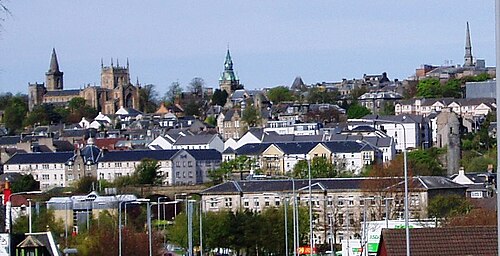
Dunfermline is a historic town located in Fife, Scotland, serving as a key part of the United Kingdom's cultural and industrial tapestry. Situated about 18 miles northwest of Edinburgh, it boasts a strategic position near the Firth of Forth, making it accessible and significant in Scotland’s history. The town’s origins trace back to the early Christian period, and it became prominent in the 11th century as a royal burgh. King Malcolm III established a strong connection with Dunfermline, which became the capital of Scotland during the early years of his reign. The town is notable for its rich heritage, with the Dunfermline Abbey, founded in 1128, being a prominent symbol of its historical significance. The abbey not only serves as a stunning example of medieval architecture but also houses the burial site of several Scottish kings and queens, including Malcolm III and Lady Macbeth.
In addition to its royal history, Dunfermline has evolved into an important industrial center. The town became a hub for the linen and textile industries in the 18th and 19th centuries, contributing significantly to Scotland's economic development during the Industrial Revolution. The remnants of this industrial past can still be observed in the architecture and landscape of the town. Dunfermline is also home to various educational institutions, including Fife College, which provides a range of vocational and academic courses. The town embraces modernity while still honoring its past, with a blend of contemporary amenities and historic sites. Recreationally, Dunfermline offers parks, shopping areas, and cultural venues that enhance the quality of life for its residents. The Carnegie Hall, named after the philanthropist Andrew Carnegie—who was born in Dunfermline—serves as a cultural venue hosting various events from concerts to exhibitions.
Dunfermline’s population has seen growth and diversification, making it a vibrant community. The local government emphasizes community engagement and sustainable living, contributing to the town's appeal. Accessibility to Edinburgh and surrounding regions via well-connected transport links has further positioned Dunfermline as a desirable place to live and work. The town's commitment to preserving its historical sites while fostering economic growth exemplifies a balanced approach to development. As a result, Dunfermline stands as a testament to Scotland's historical depth and contemporary progress, making it a noteworthy destination for both residents and visitors.
Facts about Dunfermline
- Dunfermline is historically known as the ancient capital of Scotland and was a significant royal burgh.
- The town is home to the Dunfermline Abbey, where many Scottish kings and queens, including King Robert the Bruce, are buried.
- Dunfermline features the Andrew Carnegie Birthplace Museum, dedicated to the famous industrialist and philanthropist who was born there in 1835.
- The city's Pittencrieff Park, often referred to as 'Carnegie's Park,' was gifted to the people of Dunfermline by Andrew Carnegie and is known for its beautiful gardens and wildlife.
- Dunfermline's Playhouse, originally built as a theatre in the 18th century, has a rich history in hosting entertainment and cultural events.
- The town is recognized for its strong association with the ancient Fife region, known for unique historical landmarks and traditions.
- Dunfermline became the first town in Fife to be awarded the 'Purple Flag' in recognition of its vibrant night-time economy.
- The Dunfermline Athletic Football Club, founded in 1885, is one of the oldest football clubs in Scotland and has a passionate local following.
- Dunfermline was once the site of a major textile industry and played a crucial role in Scotland's industrial revolution.
- The city has a significant historical connection with the Scottish national movement, being home to numerous events and figures influential in Scotland's quest for independence.