Dzierżoniów, Poland
- 34,168 people
- 11 places to visit
- 50.7309, 16.6568
Places to Visit (11)
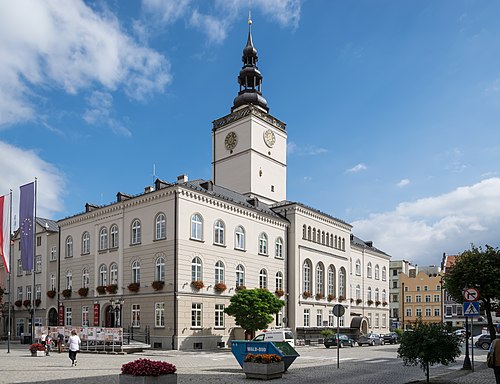
Dzierżoniów is a town situated in southwestern Poland, specifically within the Lower Silesian Voivodeship. With a population of approximately 30,000 residents, it serves as the administrative seat of Dzierżoniów County. The town covers an area of 16.34 square kilometers and lies at an elevation of 300 meters above sea level, surrounded by the picturesque landscape of the Owl Mountains and the Sowie Mountains. Dzierżoniów has a rich history, with its origins dating back to the 13th century, when it was first mentioned in historical records. It played a significant role in the region's development, particularly in the Middle Ages, due to its strategic location along trade routes.
The town has seen a variety of influences over the years, shifting hands between different states and cultures. Initially established as a Polish settlement, it became part of the Kingdom of Bohemia, followed by the Habsburg Empire, and later, Prussia. The city's German name was "Deissen," and it remained under German control until the end of World War II, when it was incorporated back into Poland. This historical context is evident in Dzierżoniów's architecture, which features a blend of Gothic, Renaissance, and Baroque styles, alongside modern developments. Notable landmarks include the Church of St. Joseph, which dates back to the 14th century, and the Old Market Square, a central hub for local activities and commerce.
In addition to its historical significance, Dzierżoniów is also recognized for its economic activities, particularly in manufacturing and technology. The town has developed a diverse industrial base, including sectors such as textiles, food processing, and machinery. Dzierżoniów is well-connected by road and rail, facilitating trade and commute to larger cities in the region, such as Wrocław. The town is also known for its recreational opportunities, with numerous parks and proximity to natural attractions, which provide a balance between urban living and outdoor activities. As a growing cultural hub, Dzierżoniów hosts various events and festivals that celebrate its heritage and promote community engagement, making it a vibrant place to live and visit.
Facts about Dzierżoniów
- Dzierżoniów is known for its unique connection to the brewing industry, being home to a number of historical breweries, including the well-preserved 19th-century 'Browar Dzierżoniów'.
- The city features the impressive Church of St. John the Baptist, which showcases remarkable Baroque architecture and is one of the city's key historical landmarks.
- Dzierżoniów has a significant history as a center for lace-making, particularly during the 19th century, which contributed to its local economic development and cultural heritage.
- The city's location at the foothills of the Owl Mountains enhances its natural beauty and makes it a popular destination for hikers and outdoor enthusiasts.
- Dzierżoniów hosts the annual 'Days of Dzierżoniów' festival, celebrating local culture, traditions, and history, which attracts visitors from surrounding regions.
- Historically, Dzierżoniów was known as Reichenbach in Silesia, and it became an important site for various trades, especially during the Middle Ages.
- The Dzierżoniów area was significantly populated by German settlers, which has influenced the city’s architectural style and cultural history, making it distinct from other Polish towns.
- Dzierżoniów is home to the 'Garden of the Senses', a unique sensory garden designed to engage multiple senses, differentiating it from typical city parks in Poland.
- The city is also recognized for its educational institutions, including the 'Technical School Complex', which focuses on vocational training and technical education.
- In Dzierżoniów, you can find the 'Historic Town Hall', which dates back to the 17th century, representing an important part of the city's civic history and architectural heritage.