East Jerusalem, Palestine
- 428,304 people
- 13 places to visit
- 31.7683, 35.2137
Places to Visit (13)
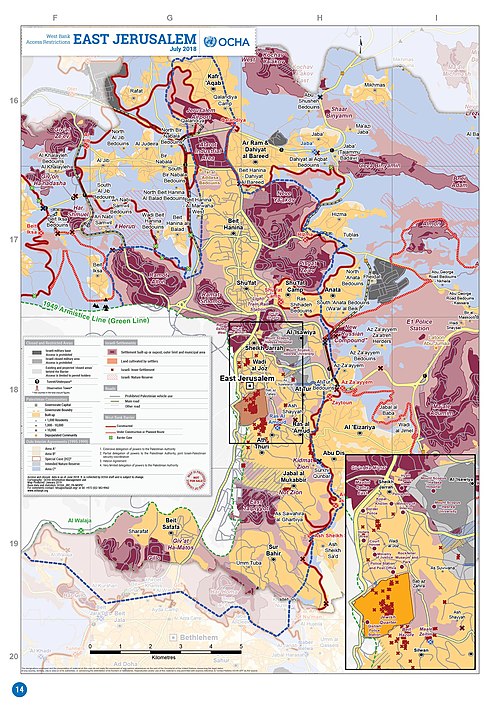
East Jerusalem, a historically and politically significant area, is located in the central part of the city of Jerusalem, which has been a focal point for religious and cultural identity for Jews, Christians, and Muslims alike. Following the 1948 Arab-Israeli War, East Jerusalem came under Jordanian control until 1967, when Israel captured the area during the Six-Day War. Since then, Israel has administered East Jerusalem, but this action has not been recognized by many international entities, which still consider it to be occupied territory. The city is home to several significant religious sites, including the Al-Aqsa Mosque and the Dome of the Rock, both important to Islam, as well as the Western Wall, revered by Jews as a part of the ancient Temple.
The demographic composition of East Jerusalem reflects a diverse population. It is predominantly inhabited by Palestinian Arabs, including Muslims and Christians, who face numerous challenges related to residency rights, access to services, and land ownership. Tensions between Palestinian residents and Israeli authorities have been a constant feature of life in East Jerusalem, especially with ongoing disputes over housing, settlement expansions, and restrictions on movement. Economically, residents often grapple with high unemployment rates and limited access to resources, leading to significant disparities compared to their counterparts in West Jerusalem, which is largely Jewish. International calls for a negotiated settlement and the recognition of East Jerusalem as the capital of a future Palestinian state continue to resonate, highlighting the enduring complexity of its status amidst a prolonged and multifaceted conflict.
Facts about East Jerusalem
- East Jerusalem is home to some of the most significant religious sites in the world, including the Al-Aqsa Mosque and the Dome of the Rock, making it a key pilgrimage destination for Muslims.
- The Old City of East Jerusalem, a UNESCO World Heritage Site, is known for its ancient walls, narrow winding streets, and a mix of cultural and religious communities.
- East Jerusalem is culturally rich, featuring neighborhoods with diverse populations, including Muslims, Christians, and Jews, each contributing to the city's unique cultural tapestry.
- The city has a historical significance as the capital of Palestine, where the Palestinian Authority has its institutions and offices.
- In 1948, East Jerusalem was captured by Jordan, and it remained under Jordanian rule until the Six-Day War in 1967, when it was annexed by Israel, leading to ongoing conflicts over its status.
- The Mount of Olives in East Jerusalem offers significant historical and religious importance, serving as a burial site for thousands and a viewpoint for the Old City.
- The City of David, an archaeological site located in East Jerusalem, is believed to be the original urban core of ancient Jerusalem and holds great importance in Jewish history.
- East Jerusalem is known for its vibrant markets, such as the Arab Souq, where visitors can experience the rich local culture through traditional crafts, food, and spices.
- The Palestinian Museum is located near East Jerusalem and showcases Palestinian history, art, and culture, providing a narrative often underrepresented in mainstream discourse.
- The annual Jerusalem International Book Fair attracts authors and publishers from around the world, highlighting the literary significance of the city amidst its complex political landscape.