Ellwangen, Germany
- 24,477 people
- 10 places to visit
- 48.9627, 10.1301
Places to Visit (10)
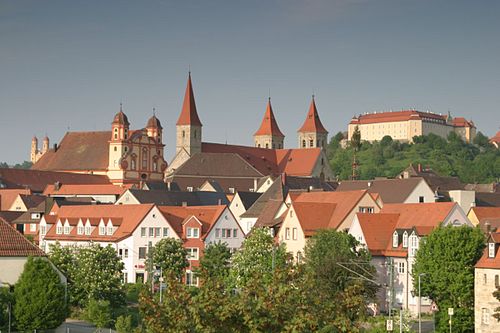
Ellwangen, located in the state of Baden-Württemberg, Germany, is a historical town that showcases a blend of medieval architecture and modern living. Situated in the Ostalbkreis district, it lies at the edge of the Swabian Jura mountains and is characterized by its picturesque landscapes and rich cultural heritage. The town's history can be traced back to the 8th century, and it became an influential center for the Benedictine order, particularly noted for the establishment of the Ellwangen Abbey, which played a significant role in the region's ecclesiastical history. The Abbey, founded in 764, remains one of the town's most prominent landmarks, featuring stunning baroque architecture and an impressive collection of art and manuscripts.
Ellwangen is also known for its charming old town, where visitors can explore narrow cobblestone streets lined with half-timbered houses and historical buildings, including the 17th-century Town Hall and St. Vitus Church, which dates back to the 11th century. The city's cultural offerings include various museums, such as the Swabian Baroque Museum, which highlights the region's artistic legacy. Events throughout the year, including the Ellwangen Fair and Christmas markets, draw both locals and tourists, enhancing the town's vibrant community spirit. With a population of approximately 23,000, Ellwangen serves as a vital hub for commerce and education in the region, embodying a unique blend of historical significance and modernity that attracts visitors and residents alike. The town's accessibility via the A7 motorway and its proximity to larger cities like Aalen and Schwäbisch Hall further solidify its status as a desirable location.
Facts about Ellwangen
- Ellwangen is home to the historic Ellwangen Abbey, a former Benedictine monastery founded in the 8th century, which showcases remarkable Baroque architecture.
- The city has a rich history of silver mining, particularly in the nearby region, which played a significant role in its economic development during the Middle Ages.
- Ellwangen is known for its 1,200-year history, making it one of the oldest settlements in the region, with roots tracing back to the time of the Merovingians.
- The Jagst River, which runs through Ellwangen, is significant for its natural beauty and offers various recreational activities, including cycling and hiking along its banks.
- Ellwangen hosts the annual Ellwangen Carnival, a lively event that celebrates local traditions and attracts visitors from across the region, featuring colorful parades and costumes.
- The city has a unique blend of medieval and modern architecture, exemplified by the historic half-timbered houses and contemporary buildings in the town center.
- Ellwangen is renowned for its 'Schloss Ellwangen', a castle that dates back to the 16th century, which now serves as a museum and cultural space.
- The city celebrates its rich musical heritage with events like the Ellwangen Music Festival, which showcases local and international musicians in various genres.
- Ellwangen is part of the Baden-Württemberg state, which is known for its high-quality education and research institutions, contributing to the city’s academic environment.
- The Rathaus (Town Hall) of Ellwangen is an iconic landmark with a fascinating history, which includes its role in local governance from the late Middle Ages to the present day.