Enugu, Nigeria
- 950,000 people
- 11 places to visit
- 6.4483, 7.5139
Places to Visit (11)
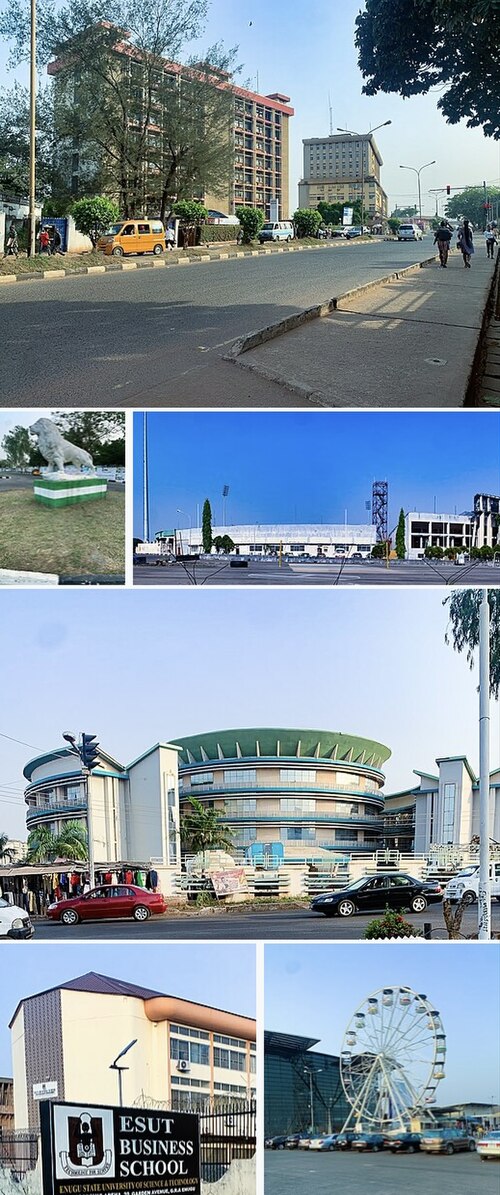
Enugu, the capital of Enugu State in southeastern Nigeria, is a city known for its rich history, cultural heritage, and significant role in the coal mining industry. Established as a mining town in the early 20th century, Enugu emerged as a key location for coal extraction during the colonial period. The discovery of coal at Udi Ridge in 1909 spurred economic development and attracted workers and traders from various parts of Nigeria. The city experienced rapid growth and urbanization, becoming the capital of the Eastern Region of Nigeria in 1954. Although coal mining has declined over the years, Enugu remains an important economic and educational center in the region.
Today, Enugu is recognized for its vibrant culture, marked by festivals, traditional ceremonies, and a diverse population. The city is home to various ethnic groups, predominantly the Igbo people, who contribute to its unique cultural landscape. Enugu hosts significant landmarks such as the Awhum Waterfall, the Nike Lake, and the Ngwo Pine Forest, all of which attract local tourism. Additionally, Enugu showcases modern developments, including universities, hospitals, and telecommunications, supporting its position as a hub for education and commerce. The Blend of historical significance and contemporary growth makes Enugu a key player in Nigeria's socio-economic landscape. Despite facing challenges such as infrastructural deficits and traffic congestion, efforts are underway by both the government and private sectors to enhance the city's development and improve the quality of life for its residents.
Facts about Enugu
- Enugu is known as the 'Coal City' due to its historical significance in coal mining, particularly during the colonial era, making it a major industrial hub in Nigeria.
- The city played a pivotal role during the Nigerian Civil War and was the headquarters of the then-Biafran government, making it a site of monumental historical importance.
- Enugu is home to the Ngwo Pine Forest, a beautiful natural attraction that offers visitors scenic landscapes and a tranquil environment, distinguished by its towering pine trees.
- The city boasts the famous Awhum Waterfall, which is known for its breathtaking beauty and spiritual significance to the local communities, attracting tourists and pilgrims alike.
- Enugu is a cultural center for the Igbo people, hosting various traditional festivals, including the New Yam Festival, which celebrates the harvest and underscores the region's agricultural heritage.
- The National Museum of Unity in Enugu showcases the rich history and culture of the southeastern region of Nigeria, featuring artifacts and exhibits related to Nigeria's diverse ethnic groups.
- Enugu features the Ogbete Market, one of the largest and oldest markets in Enugu State, recognized for its vibrant trade in local food, crafts, and goods, making it a hub of commerce.
- The city has a unique blend of colonial and indigenous architecture, with landmarks such as the Enugu State Government House reflecting historical and modern influences.
- Enugu is also known for its higher education institutions, including the University of Nigeria, Nsukka, which is one of the first degree-awarding institutions in Nigeria, contributing significantly to education and research.
- The city has a growing film industry presence, often referred to as 'Nollywood,' enhancing its reputation as a cultural capital and a prominent center for arts and entertainment in Nigeria.