Évora, Portugal
- 55,620 people
- 16 places to visit
- 38.5714, -7.9135
Places to Visit (16)
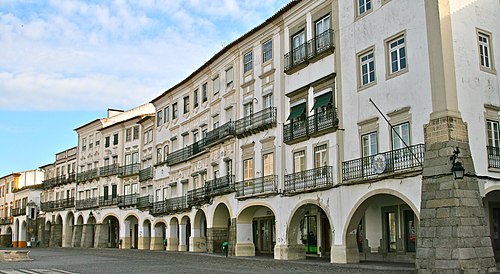
Évora, a historic city in southern Portugal, is the capital of the Alentejo region and a UNESCO World Heritage Site. With a population of approximately 56,000 residents, Évora is renowned for its rich history that dates back to prehistoric times, evidenced by numerous archaeological sites. The city was once a prominent settlement during Roman rule, and remnants of its past can still be observed, including the Temple of Diana, a well-preserved Roman structure dating back to the 1st century AD. This temple, along with other ancient ruins, highlights Évora's significance as a cultural and administrative center throughout various historical periods.
The city is also characterized by its well-preserved medieval architecture, including the Évora Cathedral, which is a mix of Gothic and Romanesque styles and dates back to the 12th century. Another notable landmark is the Chapel of Bones (Capela dos Ossos), located within the Church of St. Francis; it serves as a macabre reminder of the transience of life, decorated with the skulls and bones of monks. Évora's cobbled streets are lined with traditional whitewashed houses, many adorned with colorful tiles, and the city has a vibrant atmosphere with numerous cafes, bars, and shops reflecting its cultural heritage. The local cuisine is equally enticing, offering visitors a taste of Alentejan specialties such as hearty stews, cheese, and local wines.
In addition to its historical attractions, Évora serves as a gateway to the surrounding Alentejo region, known for its stunning landscapes, rolling plains, and vineyards. The city hosts various annual festivals that celebrate its cultural heritage and local traditions, attracting both domestic and international tourists. With its rich tapestry of history, architecture, and gastronomy, Évora not only preserves the legacy of its past but also continues to thrive as a lively urban center, making it an essential destination for those exploring the heart of Portugal.
Facts about Évora
- Évora is a UNESCO World Heritage site, designated for its well-preserved historical architecture and rich cultural heritage.
- The city is famous for the Roman Temple of Évora, also known as the Temple of Diana, which dates back to the 1st century AD.
- Évora is home to the Chapel of Bones (Capela dos Ossos), a unique 16th-century chapel decorated with human skulls and bones.
- The city was a significant center of Moorish influence, visible in its narrow streets and traditional houses with intricate tile work.
- Évora boasts one of the oldest universities in Portugal, the University of Évora, established in 1559 and still active today.
- The city's historic center is surrounded by well-preserved medieval walls, offering a glimpse into its strategic importance during various historical periods.
- Évora is known for the Festival of Évora, an annual event celebrating local culture, gastronomy, and musical performances.
- The medieval Aqueduct of Água de Prata (Silver Water Aqueduct) runs through the city, an impressive engineering feat built in the 16th century.
- Évora has a distinct Alentejo culinary culture, known for its traditional dishes such as açorda and migas, along with local wines.
- The city features the stunning Évora Cathedral, which showcases a mix of architectural styles including Romanesque, Gothic, and Manueline.