Faisalabad, Pakistan
- 2,506,595 people
- 14 places to visit
- 31.4504, 73.135
Places to Visit (14)
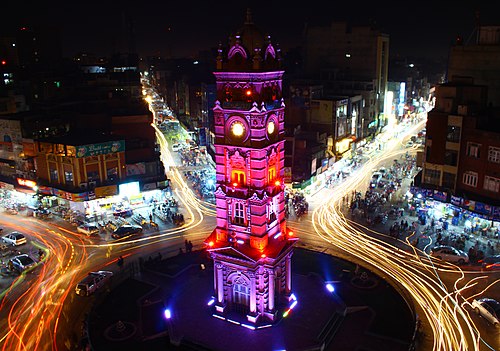
Faisalabad, located in the Punjab province of Pakistan, is the third-largest city in the country, with a population exceeding 3 million. Established in 1880 during the British colonial era as Lyallpur, the city was subsequently renamed Faisalabad in 1979 in honor of King Faisal of Saudi Arabia. Positioned at the junction of several major roads and railways, Faisalabad serves as a vital commercial and industrial center, contributing significantly to Pakistan's economy, particularly through its textile industry. The city is often referred to as the "Manchester of Pakistan" due to its extensive textile manufacturing, which accounts for a major share of the country’s exports.
Faisalabad boasts a diverse architectural landscape, reflecting both its colonial past and modern developments. The city's planning incorporates wide avenues and urban parks, making it one of the more organized urban areas in Pakistan. Notable landmarks include the Faisalabad Clock Tower, which is a remnant of the city’s British heritage, and the alluring Ghanta Ghar, a clock tower pivoting around which the city's markets and bazaars are situated. Additionally, Faisalabad is home to several educational institutions, including University of Faisalabad and University of Agriculture, Faisalabad, which play key roles in fostering research and development in various fields, particularly agriculture and textiles. The combination of industrial prowess and educational facilities makes Faisalabad a hub for business and innovation, attracting both local and foreign investments. The city's cultural heritage is reflected in its vibrant bazaars, traditional foods, and annual events, showcasing the rich tapestry of Punjabi culture amidst its fast-evolving urban landscape.
Facts about Faisalabad
- Faisalabad, originally known as Lyallpur, was established in 1880 and named after Sir James Lyall, Lieutenant Governor of the Punjab.
- The city is renowned as the 'Manchester of Pakistan' due to its prominent textile industry, which plays a significant role in the country's economy.
- Faisalabad is home to the Faisalabad Clock Tower, an iconic landmark built in 1905, representing the city's rich colonial history.
- The city has one of the largest agricultural markets in Pakistan, making it a pivotal hub for agricultural trade and commerce.
- Faisalabad is known for its unique grid system layout, designed by British engineers, which sets it apart from other cities in Pakistan.
- It hosts the Faisalabad International Trade Fair, which showcases various industries, including textiles, agriculture, and various other sectors.
- The city has a diverse cultural scene, with annual events celebrating local crafts, cuisine, and music, reflecting its rich heritage.
- Faisalabad is also the birthplace of the All Pakistan Textile Mills Association (APTMA), which plays a key role in the textile industry of the country.
- Faisalabad is home to several educational institutions, including the University of Agriculture, which is one of the leading agricultural universities in Pakistan.
- The city has a significant population of over 3 million, making it one of the most populous cities in Pakistan, often contributing to its vibrant economy and cultural diversity.