Ferrara, Italy
- 132,009 people
- 16 places to visit
- 44.8393, 11.6176
Places to Visit (16)
Ferrara is a historic city located in the Emilia-Romagna region of northern Italy, known for its well-preserved Renaissance architecture and rich cultural heritage. Founded in the 8th century, Ferrara became an important center of politics and culture during the rule of the Este family in the 13th to 16th centuries. The city is characterized by its distinctive Renaissance-style planning, with a grid structure and wide streets, which is relatively unique among Italian cities. In 1995, Ferrara was designated a UNESCO World Heritage Site, recognized for its exemplary urban development and numerous significant monuments.
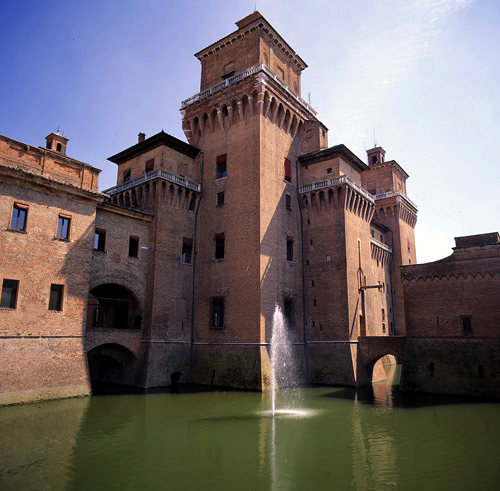
One of Ferrara's most iconic landmarks is the Estense Castle (Castello Estense), a medieval fortress that served as the residence of the Este family. Featuring a moat, drawbridges, and watchtowers, the castle exemplifies the military architecture of the time and is surrounded by a picturesque park. The city is also home to several noteworthy churches, including the Cathedral of San Giorgio, a Romanesque structure with intricate sculptures, and the Church of San Francesco, known for its stunning Gothic design. Additionally, Ferrara boasts a vibrant cultural scene, hosting events like the Ferrara Buskers Festival, which celebrates street performance, and the Ferrara Film Festival.
The local cuisine is another highlight of Ferrara, with dishes that reflect the region's agricultural richness. Traditional specialties include cappellacci di zucca, stuffed pasta with pumpkin filling, and salama da sugo, a type of sausage often served at festive occasions. Ferrara is also known for its wines, particularly the white wine known as Bianco Pio. With its blend of art, history, and culinary delights, Ferrara continues to attract visitors who seek to immerse themselves in the culture of this charming Italian city.
Facts about Ferrara
- Ferrara is known for its well-preserved Renaissance architecture, earning it a designation as a UNESCO World Heritage Site in 1995.
- The Estense Castle, a symbol of Ferrara, demonstrates the city's history as the seat of the Este dynasty and features a moat and drawbridge.
- Ferrara is home to the largest intact city walls in Italy, which date back to the 15th century and stretch for about 9 kilometers.
- The city is famous for its Palio, a historic horse race held twice a year in May and June, showcasing local neighborhoods' rivalries.
- Ferrara was a center of the Italian Renaissance, heavily influenced by the ruling House of Este, which attracted artists like Giovanni Boldini and Dosso Dossi.
- The city boasts the prestigious University of Ferrara, founded in 1391, making it one of the oldest universities in Italy.
- Ferrara is famous for its unique cuisine, particularly dishes like Cappellacci di zucca, a type of stuffed pasta filled with pumpkin.
- The Palazzo dei Diamanti, with its diamond-shaped facets, is one of Ferrara's most iconic buildings and houses the National Museum of Ferrara.
- Ferrara is recognized for having a vibrant cultural scene, including the Ferrara Film Festival and the Ferrara Buskers Festival, attracting international artists and performers.
- The city has a strong literary history, being the birthplace of the poet Ludovico Ariosto, who wrote the famous epic poem 'Orlando Furioso'.