Flint MI, United States
- 98,310 people
- 16 places to visit
- 43.0125, -83.6874
Places to Visit (16)
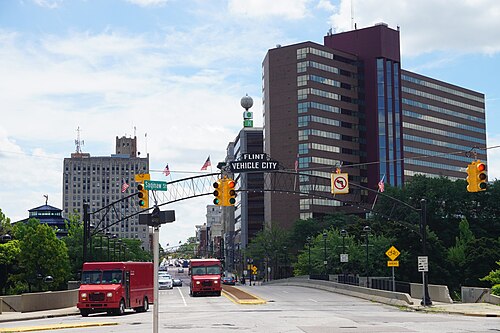
Flint, Michigan, located in Genesee County, is a city with a rich industrial history and a population that once exceeded 200,000 but has since declined significantly. Founded in the early 19th century, Flint became the birthplace of General Motors in the early 20th century, thriving on the automotive industry, which propelled its growth and earned it the nickname "Vehicle City." The city was a key site for labor movements and unionization efforts, particularly during the 1930s, when the United Auto Workers (UAW) was formed. The automotive boom brought economic prosperity, leading to the construction of various cultural and educational institutions, including museums, parks, and universities.
However, Flint's fortunes began to wane in the late 20th century as the American automotive industry faced challenges, leading to factory closures and job losses. Economic decline was exacerbated by a declining population, resulting in urban blight and a shrinking tax base. The city became notorious for its water crisis, which began in 2014 when the municipal water supply was switched to the Flint River to cut costs. This change led to widespread lead contamination and a public health emergency, resulting in a national outcry and extensive media coverage. The crisis not only brought to light issues of infrastructure neglect and environmental justice but also prompted legal actions and changes in leadership.
Despite these challenges, Flint has shown resilience and a spirit of community. Various initiatives have been established to revitalize the city, including grassroots movements aimed at improving public health and infrastructure. Local organizations and engaged citizens are working to address the consequences of the water crisis, focusing on education, economic development, and community building. While Flint continues to face significant obstacles, it is also a city in recovery, with a commitment to rebuilding and reinvigorating its unique cultural identity and potential for the future.
Facts about Flint
- Flint, Michigan is known as the birthplace of General Motors, founded in 1908, which played a significant role in the American automotive industry.
- The city was heavily impacted by the Flint water crisis that began in 2014, which brought national attention to issues of water quality and infrastructure in the United States.
- Flint is home to the Charles Stewart Mott Foundation, named after a former mayor and philanthropist, which has contributed significantly to community development and education initiatives.
- The city has a rich musical heritage, being the birthplace of various influential artists including the legendary singer and songwriter, Grand Funk Railroad.
- Flint features the Flint Cultural Center, which is home to multiple institutions including the Flint Institute of Arts and the Flint Symphony Orchestra.
- The city is known for the historic Whiting Auditorium, which hosts various performances and events, showcasing its commitment to the arts.
- Flint's population experienced significant decline in the late 20th century due to economic changes, notably the decline of the automotive industry, leading to challenges in urban revitalization.
- The Flint River, which runs through the city, is a central aspect of Flint's identity and has been the focus of ecological restoration efforts in response to pollution.
- Flint was the site of the first sit-down strike in the United States at the General Motors plant in 1936-1937, which was pivotal in labor rights and unionization movements.
- Flint is home to the University of Michigan-Flint, which serves as a key educational institution in the city, offering diverse academic programs and research opportunities.