Foligno, Italy
- 56,918 people
- 15 places to visit
- 42.9508, 12.7015
Places to Visit (15)
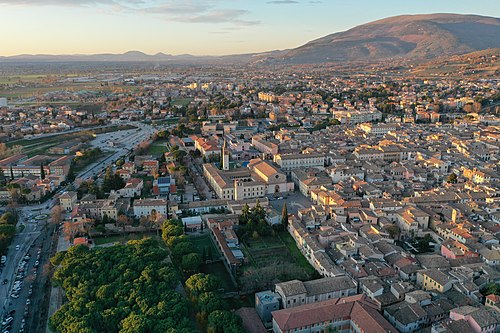
Foligno is a charming city located in the Umbria region of central Italy, positioned approximately 38 kilometers southeast of Perugia. It is known for its rich history, vibrant culture, and strategic location in the fertile plain of the Topino River. Throughout the centuries, Foligno has played an important role as a center of commerce and various artistic endeavors. Its history traces back to the Roman era, with significant archaeological finds revealing its ancient past. The city was known as "Fulginium" during Roman times, a hub for trade and agriculture, with well-documented involvement in both local and regional politics.
The architectural landscape of Foligno is a testament to its historical significance, featuring a mix of medieval and Renaissance styles. The city’s heart is marked by the stunning Piazza della Repubblica, surrounded by notable buildings such as the Cathedral of San Feliciano, which showcases remarkable Baroque architecture and houses an array of significant artworks. The Church of Santa Maria Infraportas is another key site, noted for its beautiful frescoes and historical relics. Foligno is also famous for its annual events, such as the Quintana, a medieval festival that includes a colorful parade and jousting competitions, drawing visitors from all over the world. Additionally, Foligno is known for its culinary specialties, with local dishes that highlight regional produce and wines, making it a delightful destination for food enthusiasts.
Today, Foligno combines its historical heritage with modernity, offering visitors a chance to explore its quaint streets, art galleries, and shops, while also enjoying the hospitality of its residents. The city serves as a gateway to the scenic landscapes of Umbria, with easy access to nearby attractions such as Assisi and Spoleto. With its unique blend of history, culture, and gastronomy, Foligno stands out as a lesser-known gem that captures the essence of traditional Italian life.
Facts about Foligno
- Foligno is known for its unique position in the heart of Umbria, making it an important hub for the region's trade and culture.
- The city is famous for its historic 'Giostra della Quintana,' a medieval jousting tournament that takes place twice a year, attracting visitors from all over Italy.
- Foligno boasts the impressive Cathedral of San Feliciano, which showcases a mixture of Romanesque and Gothic architectural styles and holds significant historical importance.
- The Palazzo Trinci, a remarkable 14th-century palace, is an iconic symbol of Foligno, featuring stunning frescoes and serving as a museum today.
- Foligno was a significant center for the production of high-quality paper in the Middle Ages, contributing to its economic prosperity and cultural development.
- In 2013, Foligno was designated as a UNESCO Creative City of Music, recognizing its vibrant musical heritage and initiatives.
- The city has a strong literary history and was home to the poet and writer Jacopone da Todi, who was a significant figure in Italian literature.
- Foligno is known for its delicious local cuisine, particularly the traditional 'strangozzi' pasta and 'torta al testo,' a type of flatbread.
- The town is home to the 'Museo Nazionale del Medioevo,' which houses an extensive collection of medieval artifacts and artworks unique to the region.
- Foligno's central location provides easy access to nearby historical towns such as Assisi and Spoleto, making it a strategic base for exploring Umbria.