Fortaleza, Brazil
- 2,400,000 people
- 16 places to visit
- -3.7327, -38.527
Places to Visit (16)
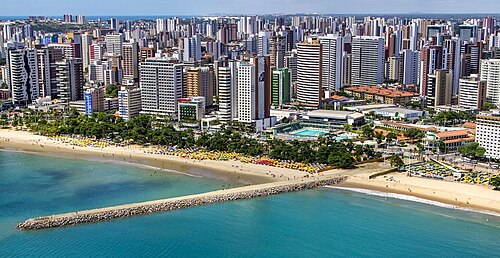
Fortaleza, the capital of the state of Ceará in northeastern Brazil, is a vibrant coastal city known for its stunning beaches, rich cultural heritage, and thriving economy. Founded in 1726 as a military fortress, the city has developed into one of Brazil's most important urban centers. With a population of over 2.6 million people, Fortaleza is the fifth-largest city in Brazil. Its strategic location along the Atlantic coast makes it a popular destination for both domestic and international tourists. The city's economy is diverse, with significant contributions from tourism, commerce, and industry.
The architectural landscape of Fortaleza is a blend of colonial and modern styles, with notable landmarks such as the Catedral Metropolitana de Fortaleza, the Theatro José de Alencar, and the Centro Dragão do Mar de Arte e Cultura, which showcases regional art, music, and cinema. The city is also famous for its beautiful beaches, including Praia do Futuro, which is known for its lively atmosphere and beach huts offering local cuisine, and Canoa Quebrada, famed for its striking clifftop views and adventure sports. Fortaleza hosts various cultural festivals throughout the year, celebrating local traditions, music, and gastronomy, thus enriching its cultural fabric.
In addition to its cultural offerings, Fortaleza is an essential hub for business and trade, ranking among the fastest-growing cities in Brazil. It is well-connected through an expanding infrastructure, including the Pinto Martins International Airport and a system of public transport that facilitates access to both urban and rural areas. As a city that balances tradition with modernity, Fortaleza offers a unique experience for residents and visitors alike, making it a key destination for those exploring the diverse landscape of Brazil.
Facts about Fortaleza
- Fortaleza is known for having one of the longest coastlines in Brazil, featuring over 25 kilometers of beautiful beaches, such as Praia do Futuro and Cumbuco.
- The city is famous for its vibrant culture and is the headquarters of the largest carnival parade in the north of Brazil, drawing thousands of visitors each year.
- Fortaleza was founded in 1726, and its historic center is home to the iconic Fortress of Our Lady of the Assumption, built by the Portuguese.
- The Dragão do Mar Art and Culture Center is a key cultural hub in Fortaleza, housing museums, theaters, and galleries, showcasing both contemporary and traditional art.
- Fortaleza has a unique culinary scene known for its seafood, and local dishes like 'moqueca' and 'peixe frito' are popular among both residents and tourists.
- The city is a major economic center in northeastern Brazil and is known for its textiles and sports goods, contributing significantly to the regional economy.
- Every June, Fortaleza hosts the Festas Juninas, a month-long festival celebrating traditional northeastern Brazilian culture with music, dance, and food.
- The city features a distinctive architectural style, blending colonial, modern, and neo-classical influences, evident in landmarks like the José de Alencar Theater.
- Fortaleza has been recognized for its commitment to sustainability, with several projects aimed at preserving the coastline and promoting eco-friendly tourism.
- The city was the first in Brazil to adopt the 'Bike Fortaleza' program, a public bike-sharing system, to promote sustainable transportation options.