Frattamaggiore, Italy
- 29,822 people
- 9 places to visit
- 40.9421, 14.2778
Places to Visit (9)
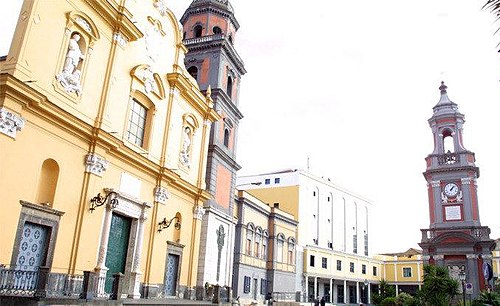
Frattamaggiore is a town located in the Campania region of southern Italy, specifically within the Metropolitan City of Naples. Founded as a small Roman settlement called "Fracta" in antiquity, it has undergone significant development over the centuries. The town is situated approximately 15 kilometers northeast of Naples and is part of a densely populated area that includes several neighboring municipalities. With a population of around 30,000 residents, Frattamaggiore is a vibrant community, characterized by a mix of historical influences and modern urban life.
The town is known for its rich historical and cultural heritage, illustrated by several notable landmarks. One of the most prominent attractions is the Basilica di San Giovanni Battista, a 16th-century church that showcases beautiful Baroque architecture. Frattamaggiore also features various palaces and buildings that reflect its historical significance, including the Palazzo della Dogana and the ancient Greek and Roman ruins nearby. The town hosts various local festivals throughout the year, celebrating its traditions, food, and music, making it an attractive destination for visitors interested in experiencing authentic Neapolitan culture.
Economically, Frattamaggiore is primarily residential, with a mix of small businesses, shops, and services catering to the local population. Its proximity to Naples enhances its appeal, as residents can easily access the larger city's economic opportunities and cultural offerings. Public transportation is well-developed, with train and bus services connecting Frattamaggiore to Naples and other surrounding areas. Overall, Frattamaggiore is a town rich in history and culture, serving as a testament to the enduring legacy of the region while embracing its role in contemporary Italy.
Facts about Frattamaggiore
- Frattamaggiore is known for its rich historical significance; it was a prominent location in the ancient Roman period, originally known as 'Frattamagioris'.
- The city is home to the 16th-century church of Santa Maria dell'Addolorata, which showcases a mix of Renaissance and Baroque architectural styles.
- Frattamaggiore has a unique local festival called 'Festa di San Giovanni', which features traditional music and dance, attracting visitors from nearby areas.
- Each year, Frattamaggiore hosts the historical re-enactment of 'Palio di Frattamaggiore', celebrating its medieval heritage and fostering a sense of community.
- The city is also recognized for its artisanal bread, 'Pane di Frattamaggiore', which has been awarded for its quality and traditional baking methods.
- Frattamaggiore is strategically located near Naples, making it an accessible destination for tourists exploring the Campania region while maintaining its distinct local charm.
- The historical center of Frattamaggiore features beautiful streets and squares that preserve the unique urban structure typical of ancient towns.
- The archaeological site of Villa di Cicerone, located near Frattamaggiore, provides insight into the Roman lifestyle and its integration into the local culture.
- Frattamaggiore is characterized by its vibrant local markets, which offer a glimpse into the daily life and traditions of the residents, especially in food and crafts.
- The city has a notable cooperation with nearby towns, promoting regional events and enhancing cultural ties through festivals and shared traditions.