Fürth, Germany
- 112,025 people
- 13 places to visit
- 49.4771, 10.9887
Places to Visit (13)
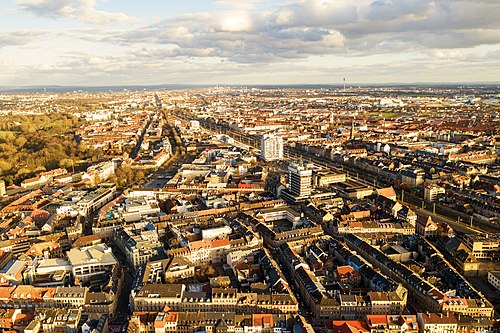
Fürth is a city located in Bavaria, Germany, just northwest of Nuremberg. With a population of approximately 130,000, it stands as the second-largest city in the Nuremberg metropolitan area. The city is notable for its historical significance and a diverse cultural scene. Founded over a millennium ago, Fürth's origins can be traced back to the early Middle Ages, and it received its town charter in 1240. The name "Fürth" is derived from the Old High German word “furth,” meaning "ford," reflecting its location near the Pegnitz River. Historic architecture is prominent throughout the city, with several buildings listed as cultural monuments, including the St. Michael's Church, a stunning example of Gothic architecture that dates back to the late 14th century.
The city's economy has evolved from its early roots in agriculture and trade to a more industrial base in the 19th century, particularly known for the development of electrical engineering and manufacturing. Major companies such as Siemens and the automobile manufacturer MAN have origins in Fürth, contributing to its economic growth and modernization. Today, the city features a mix of traditional and contemporary attractions, including museums, theaters, and parks. The Fürth City Museum highlights local history, while various cultural events such as the Fürth Theater offer diverse entertainment options. Additionally, the city celebrates its Jewish heritage, with historical sites and museums dedicated to the Jewish community that once thrived in the area.
Fürth is well-connected in terms of transportation, with an extensive public transport network, including trams and buses, ensuring easy access to Nuremberg and other surrounding areas. The city has also embraced green spaces, featuring numerous parks and recreation areas that promote a high quality of life. With a growing emphasis on sustainability and urban development, Fürth is not just a historical city but an evolving urban center with a dynamic future. Its rich history, coupled with contemporary amenities, makes it an attractive destination for both residents and visitors.
Facts about Fürth
- Fürth is known for its rich Jewish heritage, boasting a significant Jewish community and several historical sites, including the Jewish Cemetery established in 1669.
- The city is home to the only remaining vestige of the 'Fürth' brand of pottery, which was produced here in the late 18th century, making it a notable center for ceramics in Germany.
- Fürth was one of the early adopters of electric streetcars, with its first introduced in 1894, showcasing its progressive urban development during that era.
- The first-ever German-language radio station, Radio Fürth, was established in the city in 1924, influencing radio broadcasting in Germany.
- Fürth is known for its unique architectural style called 'Fürth Art Nouveau' (Jugendstil), with several buildings reflecting this design aesthetic.
- The city hosts the largest Oktoberfest in Franconia, known as the Fürth Volksfest, which features a mix of traditional Bavarian festivities and modern entertainment.
- Fürth has a long football tradition and is home to SpVgg Greuther Fürth, a club founded in 1903 that is one of the oldest in Germany.
- The Stadttheater Fürth, built in 1880, is one of the oldest theatres in Bavaria and showcases a variety of performances, including opera and theater.
- Fürth's location at the confluence of the Pegnitz and Rednitz rivers provides picturesque scenery and outdoor recreational opportunities that distinguish it from many other urban areas.
- The city is part of the Munich Metropolitan Region and has a historical connection to Nuremberg, having been traditionally seen as its smaller yet equally significant neighbor.