Fuzhou, China
- 1,089,888 people
- 15 places to visit
- 26.0614, 119.3061
Places to Visit (15)
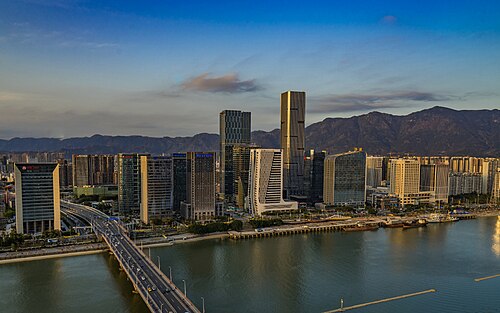
Fuzhou is the capital city of Fujian Province in southeastern China, situated along the banks of the Min River and facing the Taiwan Strait. The city covers an area of approximately 121,800 square kilometers and has a population of over 7 million residents in its urban areas, making it one of the major cities in the region. Fuzhou's history dates back over 2,000 years, and it has served as a prominent center of trade and culture since ancient times. Its strategic coastal location has made it a significant port city for maritime commerce, facilitating trade with various countries, including Japan and Southeast Asian nations.
Fuzhou is renowned for its rich cultural heritage, which includes traditional architecture, classical gardens, and local cuisine. The city is famous for its distinctive Fuzhou dialect, a variant of Min Chinese, and traditional cultural practices reflected in its opera, crafts, and festivals. Key attractions in Fuzhou include the historic Sanfang Qixiang, a well-preserved ancient residential area featuring narrow alleys and traditional buildings, and the West Lake Park, which is known for its serene landscapes and recreational facilities. Additionally, Fuzhou is recognized for its unique culinary offerings, particularly dishes like Fuzhou fish balls and various seafood concoctions, and its tea culture, with the city being famous for the production of Oolong tea.
In recent years, Fuzhou has rapidly modernized, becoming an important economic hub driven by its robust manufacturing sector, technology, and service industries. The city hosts numerous economic development zones that attract investments and promote innovation. Fuzhou's transportation infrastructure has also improved significantly, featuring an extensive public transit system, including buses, subways, and a high-speed rail network that connects it to major cities like Shanghai, Guangzhou, and Shenzhen. As a city that beautifully blends tradition with modernization, Fuzhou continues to develop its economy while preserving its rich cultural heritage, making it an attractive destination for both tourism and business in China.
Facts about Fuzhou
- Fuzhou is known as the 'City of Banyan Trees' for its abundant banyan trees and lush greenery, which are prominent throughout the city.
- The city is home to the historic Three Lanes and Seven Alleys (Sandun), a well-preserved ancient neighborhood that dates back to the Tang and Song dynasties, showcasing traditional architecture.
- Fuzhou is the capital of Fujian Province and has been a significant cultural and economic center for centuries, with a unique blend of traditional Fuzhou culture and modern influences.
- The Fuzhou dialect, a variant of Min Chinese, is distinct from Mandarin and showcases the region's unique linguistic heritage.
- Fuzhou is famous for its rich cuisine, particularly its seafood and 'Fuzhou fish balls,' which are a popular local delicacy made from fish paste.
- The city is strategically located near the Taiwan Strait, making it an important economic and trade hub, especially in the context of cross-strait relations.
- Fuzhou was the site of the First Sino-Japanese War and has several historical sites that reflect its military and revolutionary history, including the Fuzhou Gun Wharf.
- With over 130 temples and many historic sites, Fuzhou is known as a center for traditional Chinese religion and culture, hosting numerous festivals throughout the year.
- Fuzhou's architecture is characterized by its traditional folk houses, which feature large roofs and intricate carvings, with styles that differ significantly from other parts of China.
- The city is recognized for its high-tech industries and has been designated as a 'National Innovative City,' focusing on science and technology development.