Gangānagar, India
- 231,838 people
- 9 places to visit
- 29.9094, 73.88
Places to Visit (9)
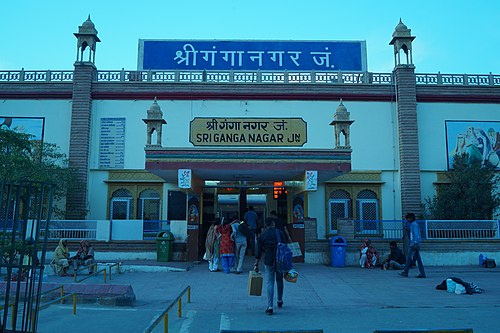
Gangānagar, located in the northwestern part of the Indian state of Rajasthan, is a city known for its rich agricultural heritage and strategic significance. It serves as the administrative center of the Sri Ganganagar district, one of the largest producers of food grains in India. The city was established in 1905 during the British Raj and is named after Maharaja Ganga Singh, a significant ruler of the erstwhile Bikaner state. Situated near the border with Punjab and close to the Pakistan frontier, Gangānagar plays a crucial role in trade and transportation.
The region's economy is primarily based on agriculture, facilitated by the extensive irrigation system from the Indira Gandhi Canal, which channels water from the Sutlej River. This has transformed the arid desert landscape into fertile plains, allowing for the cultivation of wheat, cotton, and mustard, as well as horticultural products such as fruits and vegetables. Gangānagar is often referred to as the "Food Basket of Rajasthan" due to its high agricultural output. Additionally, the city has developed into a commercial hub that supports various small-scale industries, including textiles and handicrafts, contributing to the local economy.
Culturally, Gangānagar reflects a blend of Rajasthani traditions and Punjabi influences, which is evident in its festivals, cuisine, and lifestyle. The city celebrates numerous festivals with great enthusiasm, including Teej, Diwali, and Lohri, fostering a spirit of community among its residents. Gangānagar's geographical setting also offers several attractions, including temples, parks, and the scenic Ganga Canal, making it a noteworthy destination for travelers exploring Rajasthan. Overall, Gangānagar stands out as a vibrant city that marries agricultural prowess with cultural richness, playing a significant role in Rajasthan's economic landscape.
Facts about Gangānagar
- Gangānagar is known as the 'Rice Bowl of Rajasthan' due to its extensive agriculture, particularly the cultivation of rice, making it unique in a predominantly arid state.
- The city is located at the northern extremity of Rajasthan, bordering Pakistan, which adds a significant historical and cultural richness influenced by cross-border interactions.
- Gangānagar was established in the early 20th century and is named after Maharaja Ganga Singh, who played a crucial role in developing irrigation projects in the region.
- The city is famous for the Ganga Canal, one of the first major irrigation canals in the country, which transformed the desert landscape into fertile agricultural land.
- Gangānagar boasts several historical forts and palaces, including the impressive Anupgarh Fort, reflecting its rich Rajputana heritage.
- The city hosts the famous Gangānagar Mela, a vibrant annual fair that showcases local culture, agriculture, and crafts, attracting visitors from various parts of India.
- Gangānagar has a unique climate characterized by extreme temperatures, with very hot summers and relatively cool winters, setting it apart from many other Indian cities.
- The city is home to notable educational institutions, including the Rajasthan Agriculture University, contributing to advancements in agricultural practices in the region.
- Gangānagar is also recognized for its textile industries, producing uniquely crafted fabrics and handicrafts, which are prized in both domestic and international markets.
- Each year, Gangānagar celebrates the festival of Teej with traditional fervor, marking the arrival of monsoons and reflecting the region's agricultural roots.