Genoa, Italy
- 580,097 people
- 15 places to visit
- 44.4071, 8.9347
Places to Visit (15)
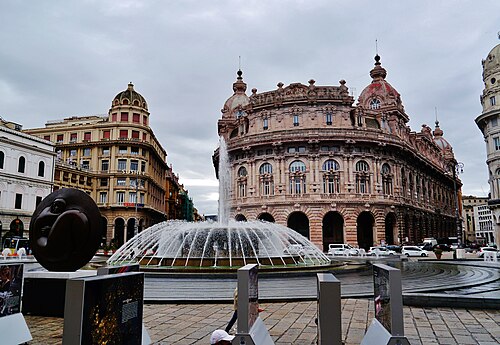
Genoa, located in northwestern Italy, is a vibrant port city and the capital of the Liguria region. Renowned for its rich maritime history, it has played a significant role in trade and commerce since the medieval period. With a population of approximately 580,000, it stands as the sixth-largest city in Italy. Its strategic position along the Italian Riviera, overlooking the Ligurian Sea, has made it a pivotal hub for navigation and sea trade. The city is characterized by its picturesque harbors, narrow winding streets known as "caruggi," and a blend of architectural styles ranging from Romanesque to Baroque, reflecting its historical significance.
One of Genoa's most remarkable features is its UNESCO World Heritage-listed historic center, which is one of the largest in Europe. The city is home to numerous palaces, including the Palazzi dei Rolli, which showcase the wealth and power of noble families during the Republic of Genoa's prime. Another cultural highlight is the Cathedral of San Lorenzo, an impressive structure that dates back to the 12th century. The city also boasts significant museums, such as the Galata Maritime Museum, and is famous for its culinary delights, particularly pesto alla Genovese, fresh seafood, and focaccia. Furthermore, Genoa serves as a gateway to the Cinque Terre and other beautiful coastal destinations, further solidifying its status as a key destination in Italy for both history and scenic beauty.
Facts about Genoa
- Genoa is known as the birthplace of Christopher Columbus, the famous explorer who discovered the Americas.
- The city features one of the largest medieval city centers in Europe, a UNESCO World Heritage site, showcasing its rich history and architectural heritage.
- Genoa has the longest seafront promenade in Italy, known as the 'Corso Italia', which offers stunning views of the Mediterranean Sea.
- The Palazzi dei Rolli, part of Genoa's historic nobility, were designated a UNESCO World Heritage site due to their unique architectural style and historical significance.
- Genoa is the capital of the Liguria region and has a major natural harbor, making it one of the most important ports in Italy since ancient times.
- The city's famous 'Focaccia', a flatbread, is a culinary specialty that has become synonymous with Genoese cuisine.
- Genoa is home to the largest aquarium in Italy and one of the largest in Europe, known as the Acquario di Genova, which highlights the city's maritime heritage.
- The city boasts the 'Via Garibaldi', a street lined with prestigious Renaissance palaces, each with unique artistic significance, exemplifying the city's wealth during the 16th century.
- Genoa was the first city to adopt the banknote system in the 16th century, playing a crucial role in the development of modern banking.
- The annual Genoa Film Festival and Ganesh Festival celebrate cinematic and cultural diversity, distinguishing the city as a hub for arts and culture in Italy.