Georgetown, Guyana
- 235,017 people
- 14 places to visit
- 6.8013, -58.1551
Places to Visit (14)
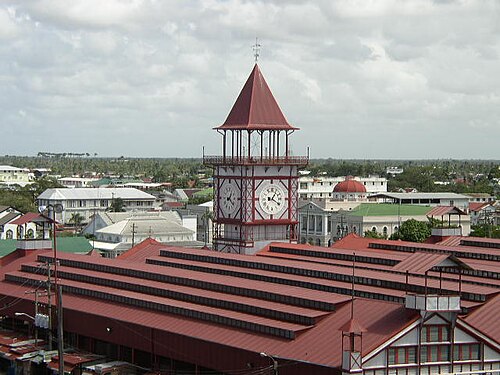
Georgetown, the capital city of Guyana, is located on the country's northern coast at the confluence of the Demerara River and the Atlantic Ocean. As the largest city in Guyana, it serves as the political, cultural, and economic hub of the nation. Founded by the Dutch in the 17th century and established as a city in 1812, Georgetown has a rich colonial heritage, which is reflected in its architecture, particularly in the historic buildings that line its streets, including St. George's Cathedral, one of the tallest wooden churches in the world, and the famous Georgetown Magistrates' Court.
The city's diverse population includes descendants of Indigenous peoples, Africans, East Indians, Chinese, and Europeans, contributing to its multicultural atmosphere. Georgetown is characterized by its vibrant markets, such as the Bourda Market, as well as its cultural events including the Mashramani celebration, marking the country's Republic Day. The city grapples with challenges, including infrastructural issues and environmental vulnerability due to climate change. However, its strategic location as a port city and its resources, particularly in the emerging oil sector, position Georgetown for potential economic growth. With a mix of historical significance and modern development, Georgetown remains a vital part of Guyana’s identity and aspirations.
Facts about Georgetown
- Georgetown is the capital city of Guyana and serves as the political, cultural, and economic center of the country.
- The city is known for its unique colonial architecture, including the iconic St. George's Cathedral, which is one of the tallest wooden churches in the world.
- Georgetown is often referred to as the 'Garden City of the Caribbean' due to its numerous parks and green spaces, such as the Botanical Gardens and the Emancipation Park.
- The city hosts the annual Mashramani festival, a vibrant celebration of Guyanese republic and cultural heritage, featuring colorful parades, music, and dance.
- Georgetown is situated on the Atlantic Ocean coast and features a distinctive seawall that protects the city from flooding during high tides and storm surges.
- The city's economy relies heavily on trade, and it hosts the largest market in Guyana, Bourda Market, where a wide variety of goods are sold.
- Georgetown's historic streets are home to many government buildings and institutions, including the National Assembly and the Office of the President.
- The city has a rich multicultural heritage, reflecting its diverse population, which includes descendants of African, Indian, Amerindian, and European residents.
- Georgetown's population is the largest in Guyana, serving as the main hub for education and healthcare services in the country.
- The city's imposing Guyana National Museum showcases the nation's history, culture, and biodiversity, setting it apart from other locations in the country.