Giurgiu, Romania
- 69,067 people
- 13 places to visit
- 43.9037, 25.9699
Places to Visit (13)
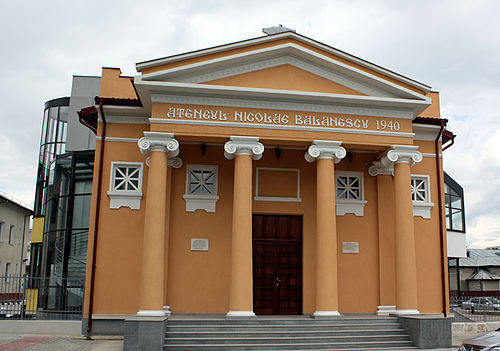
Giurgiu is a city in southern Romania, serving as the capital of Giurgiu County. It is located on the banks of the Danube River, directly opposite the Bulgarian city of Ruse. The city has a rich history that dates back to ancient times, with archaeological findings indicating that the area was inhabited as early as the Neolithic period. Giurgiu was officially recognized as a town in the 14th century, and it played a significant role in trade and commerce due to its advantageous position along the river. It was one of the key points of trade and transport in the region, facilitating exchanges between various cultures and economies.
Giurgiu features a mix of architectural styles reflecting its diverse history, with notable structures such as the Giurgiu Fortress, built in the 16th century, which was part of defensive efforts against Ottoman expansion. The city is also known for its Orthodox churches, including the Church of St. George, which was built in the 19th century and showcases a blend of Byzantine and Baroque architectural elements. Additionally, Giurgiu is home to several cultural and historical museums, which celebrate the city's heritage and the surrounding area's contributions to Romanian history.
The economy of Giurgiu is primarily driven by commerce, transportation, and agriculture, with considerable influence from its proximity to the Danube, which is vital for shipping and transport. The city serves as a critical junction in the region, connecting Romania to Bulgaria and other European countries. Over the years, Giurgiu has developed infrastructure to support its role as a border city, including bridges and modern transport facilities. The city continues to evolve, attracting both domestic and international visitors with its historical significance and picturesque riverside scenery. As part of Romania's ongoing modernization, Giurgiu is also exploring opportunities for tourism, aiming to promote its historical and cultural sites while enhancing the quality of life for its residents.
Facts about Giurgiu
- Giurgiu is located on the banks of the Danube River and serves as an important river port, making it a key transportation hub in Romania.
- The city is known for its historically significant bridge, the Giurgiu – Ruse Bridge, which connects Romania to Bulgaria and plays a crucial role in regional trade.
- Giurgiu is home to the Ruins of the Giurgiu Fortress, a historical site dating back to the 14th century, which highlights its strategic military importance during various conflicts.
- Giurgiu hosts the annual Giurgiu City Days festival, celebrating local culture, history, and traditions, thus promoting community engagement and tourism.
- The city has a unique collection of neoclassical architecture, with many buildings reflecting the influences of the Austro-Hungarian period.
- Giurgiu is recognized for its vibrant cultural scene, including the 'Toma Caragiu' Theatre, which is one of the prominent regional theaters in Romania.
- The city was the birthplace of the prominent Romanian poet and translator George Coșbuc, contributing to its literary significance.
- In contrast to other cities, Giurgiu has a diverse ethnic makeup, with communities of Romanians, Greeks, and Armenians contributing to its multicultural heritage.
- Giurgiu is often overlooked compared to larger Romanian cities, which allows it to maintain a laid-back atmosphere and a more intimate community feel.
- The city plays a significant role in Romania's trade with neighboring countries and is part of the European Union's efforts to enhance connectivity along the Danube.