Gliwice, Poland
- 198,835 people
- 16 places to visit
- 50.2945, 18.6714
Places to Visit (16)
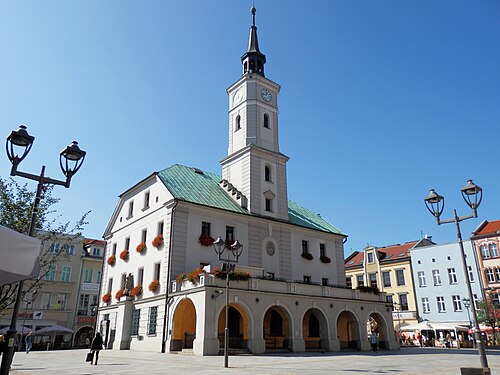
Gliwice is a city located in the Silesian Voivodeship in southern Poland, distinguished by its rich industrial history and vibrant cultural landscape. This urban center lies along the Kłodnica River and is part of the Upper Silesian Metropolitan Union, a major regional urban area. Gliwice's roots can be traced back to the 13th century, with its name derived from the Polish word for "to deceive," referring to the region's marshy terrain. The city became a significant center for coal mining and heavy industry in the 19th century, which contributed to its economic expansion and population growth. By the early 20th century, Gliwice emerged as an important hub for the German economy, particularly known for its technological advancements and automotive industry.
The architectural landscape of Gliwice showcases a blend of historical styles, exhibiting influences from various periods, particularly Gothic and Renaissance. One of the prominent landmarks is the Gliwice Radio Tower, completed in 1935 and reaching a height of 111 meters, making it the tallest wooden structure in Europe. The tower is historically significant for its role in the Gleiwitz Incident, which was one of the events that triggered World War II. The city is also home to several beautiful parks, such as the Chopin Park, and cultural institutions like the Gliwice Museum, which houses a diverse collection of art and artifacts. With a commitment to preserving its heritage while embracing modernity, Gliwice has developed into a dynamic city that also boasts a robust educational system, including the Silesian University of Technology, which attracts students from across the region. Through its blend of historical significance and contemporary innovation, Gliwice continues to thrive as a vital part of Poland's economic and cultural fabric.
Facts about Gliwice
- Gliwice is home to the Gliwice Radio Tower, which stands at 111 meters tall and is recognized as the world's tallest wooden structure and a significant part of the city's history.
- The city played a key role in the Silesian Uprisings (1919-1921), which aimed to liberate Upper Silesia from German control and integrate it into Poland.
- The historic Old Town area of Gliwice features a blend of Gothic and Renaissance architecture, including the stunning St. Bartholomew's Church, attracting visitors with its unique charm.
- Gliwice hosts the annual 'Festival of Light,' a popular event that showcases light installations and artistic displays throughout the city, drawing attention to its artistic side.
- The city has a rich industrial heritage, particularly in coal mining and steel production, significantly contributing to Poland's economic development during the industrial era.
- Gliwice is home to several higher education institutions, including the Silesian University of Technology, known for its engineering and technical programs.
- The city features the only surviving examples of a former medieval defensive system, including a preserved fragment of the city walls and a bastion.
- Gliwice is part of the Upper Silesian Metropolitan Union, which coordinates economic development and infrastructure projects among neighboring cities, showcasing its regional influence.
- The city has a vibrant cultural scene with numerous theaters, galleries, and museums, including a notable photo gallery that celebrates both local and national artists.
- Gliwice's position as a crossroads of transport routes, including rail and road, enhances its accessibility and economic significance, setting it apart from many other Polish towns.