Gniezno, Poland
- 70,269 people
- 9 places to visit
- 52.5349, 17.5827
Places to Visit (9)
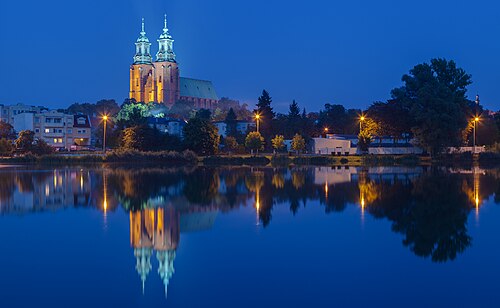
Gniezno, situated in west-central Poland, is a city steeped in historical significance and cultural heritage. Often regarded as the first capital of Poland, it holds a pivotal place in the country's early history. The city was the site of the first Polish bishopric established in 1000 AD, which underscores its importance as a religious center. Gniezno is most famously associated with the Gniezno Cathedral, a remarkable architectural masterpiece that houses the tomb of Saint Adalbert, one of Poland's patron saints. This cathedral, along with its surroundings, offers a glimpse into the medieval past of the city and serves as a vital spiritual and tourist destination.
In addition to its rich ecclesiastical history, Gniezno has experienced considerable development over the centuries, transitioning from a significant medieval settlement into a modern urban center. The city features various historical landmarks, including the Royal Gniezno, where the coronation of the first Polish kings took place, and the remains of defensive walls and gates from the ancient fortifications. Gniezno's economy has evolved, with manufacturing and services becoming prominent sectors alongside traditional agriculture. The city is also a hub for education and culture, hosting several institutions and events that celebrate its historical legacy. Gniezno's picturesque landscapes, characterized by a mix of scenic parks and the surrounding countryside, further enhance its appeal, making it a vibrant destination for both locals and visitors. Through its compelling blend of history, culture, and modernity, Gniezno stands as a testament to Poland's enduring heritage and continues to attract interest from those keen to explore its storied past.
Facts about Gniezno
- Gniezno is known as the first capital of Poland, making it a significant historical site in the country's early statehood.
- The Gniezno Cathedral, also known as the Cathedral of the Assumption of the Blessed Virgin Mary, is the resting place of Poland's first king, Bolesław I the Brave.
- Gniezno is home to the Gniezno Doors, a remarkable set of bronze doors from the 12th century that depict various biblical scenes and are considered a masterpiece of medieval art.
- The city hosts the Millenial Jubilee of the Polish State and Church, commemorating the establishment of the Polish monarchy and the archdiocese in 1000 AD.
- Gniezno is part of the 'Trail of the Polish Monarchs,' a route that celebrates the legacy of Poland's early rulers and significant historical events.
- The city's name, derived from the Old Slavic word 'gniezdo' meaning 'nest', symbolizes the place as the 'nest' of Polish statehood.
- Gniezno has a vibrant cultural scene, organizing the Gniezno Cathedral Music Festival, which attracts musicians and visitors from across the nation.
- The city is famous for the Legenda Gnieźnieńska (the Gniezno Legend), which tells the foundation story of Poland, featuring a mythical encounter with a dragon.
- Gniezno was one of the key locations during the First Polish Congress in 1000 AD, which established its importance in the context of Polish unity and culture.
- Gniezno is recognized for its significant archaeological sites, including remains that date back to the early Slavic period, highlighting its long-standing importance in Polish history.