Göttingen, Germany
- 122,149 people
- 11 places to visit
- 51.5413, 9.9158
Places to Visit (11)
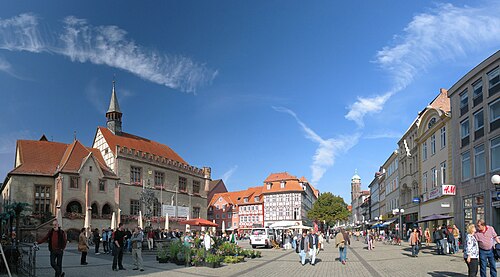
Göttingen is a historic city located in Lower Saxony, Germany, known for its rich academic legacy and vibrant cultural scene. Founded in the 10th century, it has evolved into a prominent university town, primarily recognized for the University of Göttingen, which was established in 1734. The university is one of the oldest and most prestigious in Germany, attracting students and scholars from around the globe. It has made significant contributions to various fields, particularly in the sciences and humanities. The city has been home to numerous Nobel laureates and renowned scholars, such as the mathematician David Hilbert and the physicist Max Born, reinforcing its reputation as a center of academic excellence.
Beyond its academic stature, Göttingen boasts an array of architectural and cultural attractions. The city's historic center features charming half-timbered houses and the iconic Gänseliesel fountain, which serves as a symbol of the city. Göttingen's atmosphere is lively, thanks to the presence of a large student population, which contributes to a dynamic nightlife and diverse cultural events. Festivals, concerts, and theater performances are common, enriching the city's social fabric. Additionally, Göttingen is well-known for its botanical garden, established in the 18th century, and several museums that celebrate its history and natural sciences. With its blend of tradition and modernity, Göttingen continues to be a significant cultural and educational hub in Germany.
Facts about Göttingen
- Göttingen is often referred to as a 'city of science' due to its prestigious University of Göttingen, founded in 1737, which has produced numerous Nobel laureates.
- The city is home to the Gänseliesel fountain, a popular symbol and landmark that depicts a young girl herding geese, and it is considered the unofficial mascot of Göttingen.
- Göttingen has a unique tradition where doctoral graduates are often celebrated with a 'Gänseliesel kiss' at the fountain after their defense.
- Göttingen's botanical garden, established in 1753, is one of the oldest in Germany and features over 13,000 species of plants from around the world.
- The city has a rich literary history, having been the residence of renowned poets like Heinrich Heine and the Brothers Grimm, who collected fairy tales there.
- Göttingen hosts the annual Göttingen International Handel Festival, celebrating the music of George Frideric Handel, who was born in Germany.
- The Göttingen Academy of Sciences, founded in 1751, is one of the oldest academies of sciences in Germany and contributes significantly to research and scholarship.
- The city played a notable role in the German Enlightenment era, making significant academic contributions in fields such as mathematics, philosophy, and natural sciences.
- Göttingen features a unique blend of half-timbered houses, historic buildings, and a vibrant student atmosphere, thanks to its large student population from the university.
- The city's central location in Lower Saxony makes it an important transport hub, providing easy access to other major cities and regions in Germany.