Gongju, South Korea
- 72,435 people
- 4 places to visit
- 36.4798, 127.0752
Places to Visit (4)
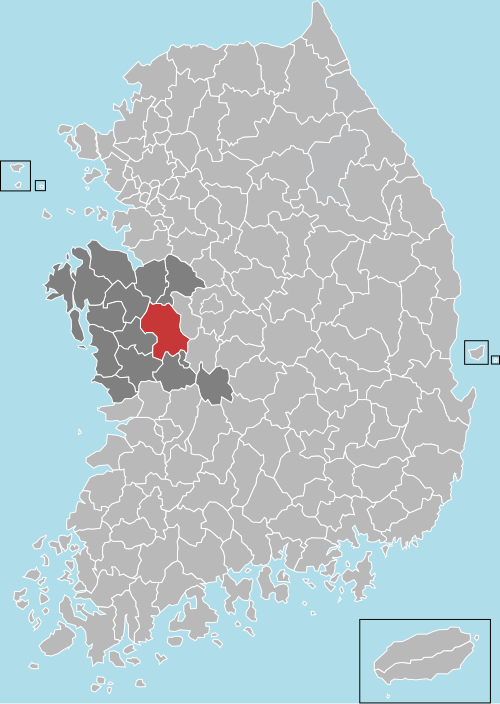
Gongju is a city located in the South Chungcheong Province of South Korea, known for its rich history and cultural heritage. It was once the capital of the Baekje Kingdom, one of the Three Kingdoms of Korea, during the early centuries of the Common Era. The city is situated in a scenic area characterized by rolling hills and the Geum River, providing a picturesque backdrop that complements its historical significance. Gongju has a population of approximately 100,000 inhabitants and serves as an important urban center for the province, playing a vital role in both economic and cultural activities.
The city is renowned for its archaeological sites and monuments that reflect its storied past. The Gongju National Museum showcases a variety of artifacts from the Baekje period, including exquisite pottery, jewelry, and royal tombs. One of the most significant sites is the Wanggungni Historic Site, where remnants of the ancient city of Baekje can be found. Additionally, the tombs of the Baekje kings are located in the nearby Songsan-ri, which is recognized as a UNESCO World Heritage Site, along with other cultural properties related to the ancient kingdom. The harmonious blend of history and nature makes Gongju an attractive destination for both tourists and scholars alike.
Modern-day Gongju is not only a bastion of history but also a vibrant community with a variety of educational institutions, local markets, and recreational facilities. The city promotes various cultural festivals that highlight its heritage, particularly the Baekje Cultural Festival, which showcases traditional performances, crafts, and local cuisine. The city’s infrastructure has improved significantly, resulting in easy access to transportation links that connect it to bigger cities like Daejeon and Seoul, enhancing its role as a vital transportation hub. With its unique combination of historical significance and modern amenities, Gongju continues to be a remarkable city that captures the essence of South Korea's cultural evolution.
Facts about Gongju
- Gongju was the capital of the Baekje Kingdom during the Three Kingdoms period, making it a site of significant historical importance.
- The city is home to the UNESCO World Heritage Site of the Baekje Historic Areas, which includes well-preserved ancient tombs and palaces.
- Gongju is famous for the Gongju National Museum, which houses a vast collection of artifacts from the Baekje period, showcasing the rich cultural heritage of the area.
- The city hosts the annual Baekje Cultural Festival, celebrating the history and culture of the Baekje Kingdom with various performances, exhibitions, and traditional activities.
- Gongju features the historic Gongsanseong Fortress, which dates back to the Baekje period and offers panoramic views of the surrounding landscape.
- The royal tombs in Gongju, known as the Tombs of the Kings of Baekje, are unique in their design and construction, distinguished by stone structures.
- Gongju is renowned for its traditional craft of making 'Gongju Paper' (Hanji), known for its durability and aesthetic quality, used in various art forms.
- The city is set in a region with stunning natural beauty, surrounded by mountains and rivers, making it a popular destination for outdoor enthusiasts.
- Gongju played a pivotal role in the spread of Buddhism in Korea, with notable temples like the Magoksa Temple located in the vicinity.
- The city's urban development reflects a blend of historical preservation and modernity, making it a unique example of a city that honors its past while embracing the future.