Goole, United Kingdom
- 20,810 people
- 13 places to visit
- 53.7045, -0.8746
Places to Visit (13)
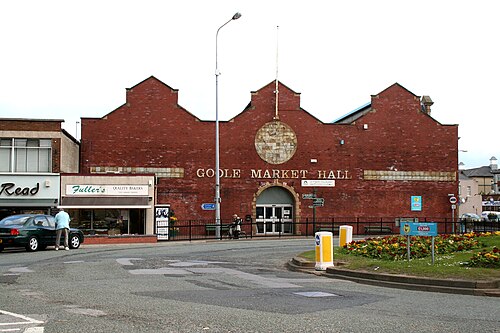
Goole is a port town situated in the East Riding of Yorkshire, England, and lies approximately 20 miles southwest of York and 14 miles southeast of Leeds. Established in the early 19th century as a commercial port, Goole has developed around its strategic position at the confluence of the River Ouse and the River Don. The town’s original purpose was as a means to facilitate the transport of coal and other goods from the Yorkshire coalfields to various destinations, including London. A significant period of growth occurred in the early 1800s following the construction of the Aire and Calder Navigation Canal, which allowed larger vessels access to the inland areas, thus enhancing trade and commerce. Goole's success as a port led to the establishment of various industries, and it became a vital center for shipbuilding and manufacturing, particularly during the Victorian era.
Today, Goole is known for its unique blend of industrial heritage and modern development. The port remains active, dealing primarily with bulk cargoes, including agricultural products, coal, and other materials. The town has also adapted to changing economic conditions, with sectors such as logistics and warehousing becoming increasingly important. Goole is home to the largest inland port in the United Kingdom, which supports the local economy and contributes to job creation. In addition to its industrial significance, Goole boasts a vibrant community with facilities such as schools, parks, and recreational areas. Notably, the town is known for its rich history and architecture, including the listed Goole Dock and the iconic Goole Clock Tower.
Culturally, Goole engages with the arts through its local theatre and community events, promoting a sense of community and pride among its residents. The town is also served by the East Coast Main Line, providing rail connections to other major cities, which enhances accessibility for both residents and visitors. Surrounded by picturesque countryside, Goole offers opportunities for outdoor activities along the rivers and in nearby green spaces. As of the 2021 census, the population of Goole was estimated to be around 20,000, reflecting its role as a key urban center within the region. Overall, Goole is characterized by its historical significance, industrial roots, and ongoing evolution as a modern town, making it an important part of the UK's economic and cultural landscape.
Facts about Goole
- Goole is often referred to as the 'Port of East Yorkshire' and is known for its significant role in maritime trade since the 19th century.
- The town is uniquely home to the Goole Docks, which is one of the most important inland ports in the UK, facilitating trade along the River Ouse.
- Goole is notable for its distinctive and well-preserved Victorian architecture, which includes the iconic Goole railway station, opened in 1869.
- The town is associated with the famous writer and poet, Sir Edward Arthur Wilson, who published works on the natural history of Yorkshire.
- Goole's annual 'Goole Carnival' is a vibrant community event, featuring parades, live music, and various entertainment activities that draw visitors from surrounding areas.
- The town has a strong industrial heritage, with historical links to coal mining, glass making, and various engineering industries.
- Goole is the only town in the UK that has a floating crane, named 'Flora,' which operates at the Goole Docks, demonstrating the town's unique maritime capabilities.
- The unique Goole Cemetery features notable monuments and graves, including those of local heroes and war veterans, contributing to the town's rich historical narrative.
- Goole is part of the East Riding of Yorkshire and serves as an important transportation hub, linking road and rail networks, making it significant for logistics and industry.
- The town boasts the Goole Museum, which provides an insight into the local history and culture, showcasing artifacts from various periods of Goole's development.