Gorizia, Italy
- 34,428 people
- 12 places to visit
- 45.9401, 13.6203
Places to Visit (12)
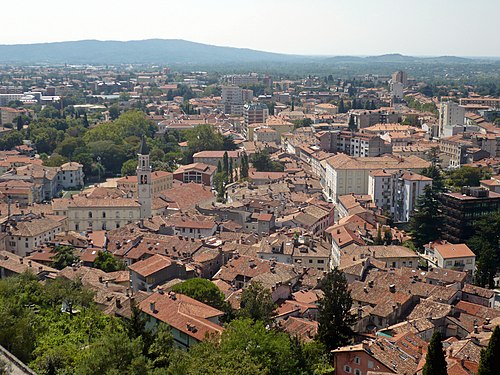
Gorizia is a historic city located in the northeastern part of Italy, part of the Friuli Venezia Giulia region. Situated at the confluence of the Isonzo River and the border with Slovenia, Gorizia has a rich cultural and historical significance, shaped by its unique location at the crossroads of different civilizations and empires. The town's architecture reflects its diverse heritage, featuring a mixture of Renaissance, Baroque, and Austro-Hungarian influences. Gorizia is known for its picturesque medieval castle, which stands on a hill overlooking the city, and the beautiful Piazza Vittoria, the main square that brims with cafés, shops, and local life.
Historically, Gorizia was part of the Patriarchate of Aquileia and later became an integral part of the Habsburg Monarchy. The city flourished in the 19th century, becoming an important center for trade and culture. The aftermath of World War I had a profound impact on Gorizia, as the region was divided between Italy and the Kingdom of Serbs, Croats, and Slovenes, leading to the creation of the modern border that still exists today. The division has influenced the town’s identity, with both Italian and Slovenian cultures coexisting, resulting in a unique bilingual environment. Today, Gorizia is often seen as a symbol of reconciliation, with efforts made to foster cross-border cooperation and cultural exchange with its sister city, Nova Gorica, located just across the border in Slovenia.
The city offers a variety of attractions for visitors, including museums that showcase local history and art, such as the Museo della Grande Guerra, which focuses on the First World War, and the important cultural festivals that celebrate both Italian and Slovenian heritage. Gorizia is also a gateway to stunning natural landscapes, including the surrounding wine-producing regions and nearby hills, which are ideal for outdoor activities such as hiking and cycling. The blend of history, culture, and natural beauty makes Gorizia an intriguing destination for tourists and a vibrant community for its residents.
Facts about Gorizia
- Gorizia is known for its unique geographical position, sitting on the border between Italy and Slovenia, which has influenced its cultural and historical development.
- The city is home to the historic Gorizia Castle, which offers panoramic views of the surrounding area and reflects the city's medieval past.
- Gorizia was significantly impacted by World War I and the subsequent Treaty of Rapallo in 1920, which altered its borders and marked a shift in its national identity.
- The city hosts a vibrant cultural exchange due to its proximity to Slovenia, which is evident in its bilingual signage and shared traditions, particularly in cuisine.
- Gorizia is part of the Isonzo River area, known for a series of battles during World War I; the river's significance adds a layer of historical importance to the region.
- The annual Gorizia Wine Festival celebrates the local wine production, particularly the wines of the Collio region, making it a notable event for wine enthusiasts.
- Gorizia has a rich architectural heritage, featuring a combination of Italian, Austrian, and Slavic influences in its buildings, reflecting its history as part of the Austro-Hungarian Empire.
- The city's historical center features elegant arcades and charming squares, differing from many other Italian towns that often focus heavily on ancient Roman architecture.
- Gorizia was once known as the 'Vienna of the East' due to its cultural prominence and was a hub for various artistic movements in the late 19th and early 20th centuries.
- The nearby town of Nova Gorica, Slovenia, was established as a planned city in the 1940s, demonstrating a modern attempt at urban development in the context of post-war territorial changes.