Gotha, Germany
- 46,615 people
- 11 places to visit
- 50.9474, 10.7098
Places to Visit (11)
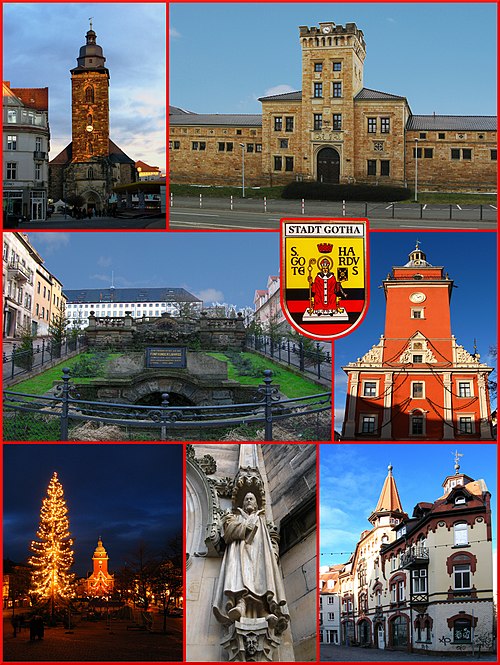
Gotha is a city located in central Germany, in the state of Thuringia. It serves as the capital of the district of Gotha and is situated approximately 20 kilometers southwest of Erfurt, the state capital. With a population of around 45,000 residents, Gotha is known for its rich cultural heritage and historical significance. The city’s roots can be traced back to the early Middle Ages, with mentions of Gotha appearing in historical records as early as the 13th century. It gained prominence in the 17th century when it became the residence of the Duchy of Saxe-Gotha, playing a pivotal role in the development of the region.
One of the most notable landmarks in Gotha is the Friedenstein Castle, a grand Baroque palace constructed in the 17th century by Duke Ernst I of Saxe-Gotha. The castle houses several museums, including the Gotha Museum of Natural History and the Ekhof Theatre, which is one of the oldest surviving court theatres in Germany. The city is also home to the Botanical Garden, established in 1775, which showcases a variety of plant species and serves as a peaceful retreat for residents and visitors alike. Gotha’s historical architecture is complemented by a vibrant arts scene, with numerous cultural events held throughout the year.
The city reflects a blend of historical charm and modern development, characterized by its bustling town center with shops, cafes, and restaurants. Gotha is well-connected by public transportation, making it accessible for those wishing to explore the surrounding Thuringian countryside. Visitors can experience the city's historical significance through guided tours and local festivals that celebrate its heritage. With its rich history, cultural offerings, and scenic surroundings, Gotha continues to be a significant destination in Thuringia, attracting both tourists and cultural enthusiasts.
Facts about Gotha
- Gotha is known as the 'City of the Dukes' due to its historical association with the Duchy of Saxe-Gotha-Altenburg in the 17th and 18th centuries.
- The Gothaer Wartburg Castle, a UNESCO World Heritage site, is located nearby and is famous for its connection to Martin Luther and the Reformation.
- Gotha is the birthplace of the German composer Johann Christian Friedrich Haeffner, a notable figure in classical music history.
- The iconic Gotha Town Hall, dating back to the 16th century, features a stunning renaissance-style architecture that reflects the city's rich heritage.
- Gotha is home to the famous Gotha Zoo, which is one of the oldest zoos in Germany, founded in 1861, showcasing a wide variety of animal species.
- The city hosts the Gotha International Piano Festival, attracting musicians and audiences from around the world to celebrate classical music.
- Gotha has a diverse array of parks and gardens, prominently the Ekhof Theater, which offers a unique baroque opera experience in a historical setting.
- The city's clock tower, the Glockenspiel, features a unique carillon that plays every hour, adding to Gotha's distinctive character.
- Gotha is recognized for its role in the establishment of the first census in Germany during the 19th century, reflecting its historical significance in demographic studies.
- The famous Gothaer Insurance, established in the city, is noted for being one of the oldest insurance companies in the country, linking Gotha to financial history.