Gravina in Puglia, Italy
- 42,210 people
- 10 places to visit
- 40.8171, 16.4184
Places to Visit (10)
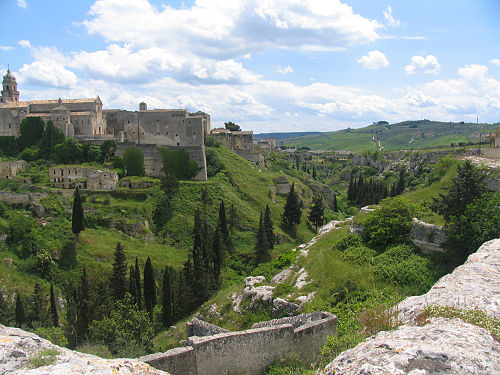
Gravina in Puglia is a historic town located in the Apulia region of southern Italy, specifically in the Metropolitan City of Bari. It lies on the edge of the Murgia Plateau, approximately 50 kilometers southwest of Bari. The town is positioned strategically atop a limestone hill and is characterized by its impressive ravines and scenic valley views formed by the Gravina River. The area has been inhabited since ancient times, with archaeological finds indicating a settlement dating back to the Paleolithic era, making it a place of significant historical and cultural importance. The picturesque landscape of Gravina features ancient churches, monasteries, and noteworthy Baroque architecture, reflecting the various influences that have shaped the town over centuries.
Gravina in Puglia is renowned for its rich historical heritage, with the most prominent landmark being the Cathedral of Santa Maria Assunta, built in the 13th century and later modified in the Baroque style. The town also boasts a unique system of cave dwellings known as "sassi," which were utilized by inhabitants for centuries due to the region's limestone geology. These caves served various purposes, including housing, storage, and places of worship. As a testament to its historical significance, the town is part of the UNESCO World Heritage Site of the "Sassi and the Park of the Rupestrian Churches of Matera," highlighting the interconnectedness of the area's ancient civilizations.
In modern times, Gravina in Puglia is known for its vibrant local culture, traditional cuisine, and annual folkloric events such as the "Festa di San Giorgio," which honors the town's patron saint. The local economy is primarily based on agriculture, with production of olives, grapes, and cereals, as well as some small-scale industry and tourism. The town attracts visitors with its charming old town, local artisan shops, and opportunities for hiking in the surrounding natural landscapes. As a destination that combines historical intrigue, stunning scenery, and authentic Italian culture, Gravina in Puglia offers a unique glimpse into the rich tapestry of southern Italy.
Facts about Gravina in Puglia
- Gravina in Puglia is known for its unique rock formations and ancient cave dwellings, which were originally inhabited by the prehistoric population, making it a site of historical interest.
- The town is famous for its remarkable 'Gravina's Bridge', a stunning 19th-century stone bridge that offers breathtaking views of the Gravina ravine.
- Gravina in Puglia has a rich tradition of bread-making, notably its specific type of bread called 'Pane di Gravina', which is recognized for its unique flavor and texture.
- The city is home to the 'Basilica di Santa Maria Assunta', a significant church with a blend of Romanesque and Gothic architectural styles, showcasing the town's historical evolution.
- Gravina played a key role during the medieval period as a center for pilgrimage and religious activities, which contributed to its rich cultural heritage.
- In 1440, Gravina was granted the title of 'City' by King Alfonso of Aragon, marking an important milestone in its historical development.
- The town hosts the 'Sagra del Carro', an annual festival celebrating local traditions with parades, music, and food, attracting visitors from various regions.
- Gravina is part of the Murgia region, known for its distinctive dry-stone walls and trulli, which are traditional Apulian stone huts.
- The local cuisine prominently features 'Cicoria', a type of wild chicory, which is a staple in Gravina’s traditional dishes, setting it apart from culinary offerings in other Italian towns.
- Gravina in Puglia is also known for its archaeological sites, which include remnants of ancient Roman settlements, highlighting its historical significance in the region.