Graz, Austria
- 295,424 people
- 17 places to visit
- 47.0679, 15.4417
Places to Visit (17)
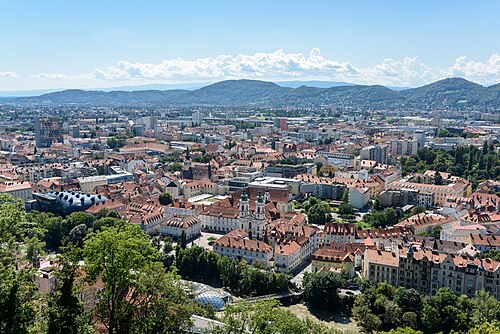
Graz, the capital of Styria and the second-largest city in Austria, is renowned for its rich history, vibrant culture, and picturesque architecture. Situated in the southeast of the country, it lies along the banks of the Mur River and is surrounded by lush vineyards and hills, making it a scenic location. Graz's historic center is a UNESCO World Heritage Site, recognized for its well-preserved medieval and Renaissance structures. Notable landmarks include the iconic Graz Clock Tower, the impressive Schlossberg hill, and the Landeszeughaus, which houses the world's largest collection of historic arms and armory. The city's architectural diversity reflects its historical significance, with influences ranging from Gothic to Baroque and contemporary designs, culminating in the striking Kunsthaus Graz, a modern art museum known for its unique biomorphic shape.
Culturally, Graz is vibrant and dynamic, boasting a thriving arts scene and numerous festivals throughout the year. As a designated UNESCO City of Design, it emphasizes creativity and innovation, attracting artists and designers from around the globe. The city hosts the annual Styriarte festival focusing on classical music, as well as the Graz International Film Festival, showcasing cutting-edge cinema. Graz is also home to several renowned educational institutions, including the University of Graz and the Graz University of Technology, contributing to its youthful and energetic atmosphere. This blend of cultural richness, academic prowess, and historical charm makes Graz an appealing destination for visitors and a significant hub for education and innovation in Austria. With its lively cafes, diverse culinary scene, and welcoming atmosphere, Graz offers a unique experience that reflects both its storied past and its vibrant modern identity.
Facts about Graz
- Graz is the second-largest city in Austria, after Vienna, and serves as the capital of Styria.
- The city is known for its well-preserved medieval old town, which is a UNESCO World Heritage site since 1999.
- Graz is home to the Schlossberg, a hill topped with a clock tower that offers panoramic views of the city.
- The city is recognized for its vibrant student population, being the location of several universities, including the Graz University of Technology and the University of Graz.
- Graz hosts the annual Styrian Autumn festival, celebrating art and culture across the region with numerous events and exhibitions.
- The city has a rich culinary scene, famous for its Styrian pumpkin seed oil and the traditional dish, 'Backhendl' (fried chicken).
- Graz was awarded the title of European Capital of Culture in 2003, highlighting its rich cultural scene and historical significance.
- The city features the Kunsthaus Graz, a contemporary art museum known for its unique architecture, often referred to as the 'friendly alien.'
- Graz is the birthplace of the composer Ludwig van Beethoven's teacher, Joseph Haydn, making it a significant location in classical music history.
- Graz is known for its emphasis on green spaces and has been recognized for its commitment to sustainable urban development.