Greifswald, Germany
- 52,731 people
- 18 places to visit
- 54.0865, 13.3923
Places to Visit (18)
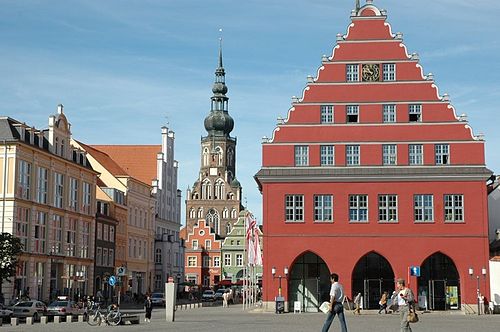
Greifswald is a picturesque city located in the northeastern part of Germany, situated on the western shore of the Baltic Sea in the state of Mecklenburg-Vorpommern. With a population of approximately 60,000, it is one of the oldest university towns in the country, partially defined by its intellectual and cultural heritage. Founded in the 13th century, Greifswald possesses a rich history evident in its architecture and the preservation of medieval structures. The city is noted for its charming Gothic and Renaissance buildings, including the St. Nicholas Cathedral, which dates back to the 14th century, and numerous historic houses that line its cobbled streets.
A significant feature of Greifswald is its long-standing connection to academia, anchored by the University of Greifswald, established in 1456, making it one of the oldest universities in Europe. The institution has played a vital role in shaping the city’s identity, attracting students and scholars from various regions. The university’s comprehensive programs in the humanities, social sciences, natural sciences, and medicine contribute to a vibrant academic atmosphere, fostering research and innovation. Greifswald also hosts several cultural events throughout the year, including the Greifswald Music Week and the Fête de la Musique, which draw participants from around the region and beyond.
Economically, Greifswald has evolved significantly in recent decades, transitioning from an industrial base to a more diversified economy, including technology and renewable energy sectors. The proximity to the Baltic Sea influences its economy, with activities such as tourism and fishing remaining prominent. The nearby natural reserve of the Greifswald Lagoon and the surrounding countryside offer opportunities for outdoor recreation, attracting visitors with its scenic landscapes. Greifswald's blend of history, education, and economic development, along with its stunning coastal setting, makes it a unique destination for travelers and a vibrant community for its residents.
Facts about Greifswald
- Greifswald is home to the University of Greifswald, which was founded in 1456 and is one of the oldest universities in Germany.
- The city is known for its historic architecture, including the impressive St. Nicholas Cathedral, which dates back to the 14th century.
- Greifswald is situated on the Baltic Sea and is famous for its scenic waterfront and the nearby island of Usedom, a popular vacation destination.
- The town is recognized for its connection to the German Romantic artist Caspar David Friedrich, who was born in the region and often drew inspiration from its landscapes.
- Greifswald hosts the annual 'Greifswald Maritime Academy,' focusing on marine science and maritime studies, making it a hub for maritime research in Germany.
- The city is a significant center of wind energy research and production, contributing to Germany's renewable energy sector.
- Greifswald has a unique event called the 'Greifswald's Wine and Vines Festival' which celebrates wine culture and includes regional wine tastings and live music.
- In 1628, Greifswald played a critical role in the Swedish Empire's control over the area during the Thirty Years' War, showcasing its strategic historical importance.
- The city's historic town center includes a striking number of Gothic-style buildings, rare for many towns across Germany.
- Greifswald is one of the few places in Germany where you can see the unique 'Greifswald's Trollinger,' a grape variety specific to the region.