Grenoble, France
- 158,552 people
- 17 places to visit
- 45.1885, 5.7245
Places to Visit (17)
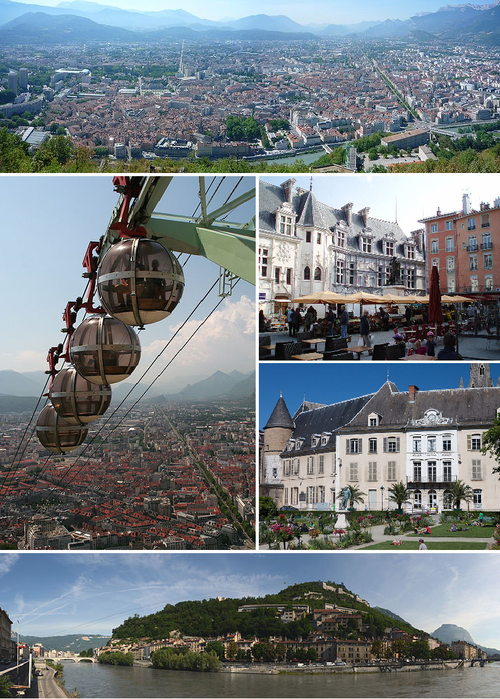
Grenoble, located in southeastern France, is the capital of the Isère department and is nestled at the foot of the French Alps. With a population of around 160,000, it is one of the largest cities in the Auvergne-Rhône-Alpes region. The city is renowned for its stunning surroundings and is often referred to as the "Capital of the Alps." Known for its rich history, Grenoble traces its roots back to Roman times when it first appeared as "Cularo." Over the centuries, the city has evolved into a major cultural and scientific hub, distinguished by its vibrant academic institutions, including the University of Grenoble and several prestigious research centers.
One of the most striking features of Grenoble is its unique geographical setting. It is bordered by three mountain ranges: the Chartreuse, Vercors, and Belledonne, making it a favored destination for outdoor enthusiasts. The city offers a gateway to various winter sports and summer activities, attracting visitors year-round. Beyond its natural beauty, Grenoble is widely recognized for its technological and industrial advancements. It has become a significant center for innovation, particularly in the fields of nanotechnology, renewable energy, and information technology. The city's economy benefits from a combination of traditional industries and modern research facilities, promoting a dynamic atmosphere for both businesses and academics.
Culturally, Grenoble boasts a diverse array of museums, theaters, and festivals. The Musée de Grenoble is notable for its extensive collection of contemporary and classical art, while the annual Festival du Court Métrage showcases short films from around the globe. The city's historical architecture contrasts with modern developments, exemplified by landmarks such as the Bastille, a 19th-century fortress offering panoramic views of the city and surrounding mountains. With its blend of history, culture, and innovation, Grenoble is a vibrant city that reflects both its Alpine heritage and contemporary advancements, making it an attractive destination for tourists and a thriving locale for residents.
Facts about Grenoble
- Grenoble is known as the 'Capital of the Alps' due to its proximity to several major alpine mountains and ski resorts.
- The city hosted the 1968 Winter Olympics, becoming the first French city to host the Winter Games and showcasing its role as a winter sports destination.
- Grenoble is home to the world's first electric tramway, which was established in 1892 and served as a model for public transportation systems worldwide.
- The Bastille, a historic fortress overlooking Grenoble, offers panoramic views of the city and is accessible by a cable car, a unique feature among French cities.
- Grenoble has a significant student population, with around 60,000 students in various higher education institutions, making it one of the largest university towns in France.
- The city is renowned for its vibrant scientific community and research, being home to several high-tech companies and research institutions, particularly in the fields of nanotechnology and biotechnology.
- Grenoble has a rich history in the French resistance during World War II, and the city recognizes its past with numerous memorials and events that honor its contributions.
- The city boasts a number of major art institutions, including the Musée de Grenoble, which is known for its impressive collection of modern and contemporary art.
- Grenoble is renowned for its commitment to eco-friendly policies, being one of the first cities in France to adopt a Sustainable Urban Mobility Plan.
- The annual Festival of Music in Grenoble, known as 'Fête de la Musique', is one of the largest music festivals in France, highlighting the city's cultural dynamism.