Grudziądz, Poland
- 95,045 people
- 12 places to visit
- 53.4837, 18.7536
Places to Visit (12)
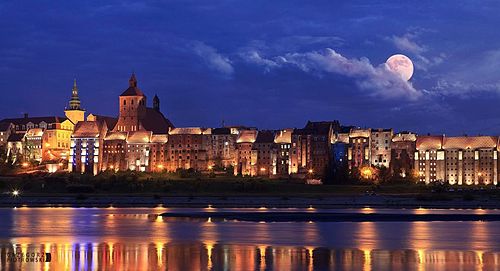
Grudziądz is a historic city located in northern Poland, within the Kuyavian-Pomeranian Voivodeship. Situated on the west bank of the Vistula River, Grudziądz serves as an important cultural and economic center in the region. Founded in the early Middle Ages, the city has a rich history, with its origins possibly dating back to the 13th century. Grudziądz was granted city rights in 1291 and quickly developed as a key trading hub, thanks to its strategic location along the Vistula, which facilitated commerce with other parts of Europe. Over the centuries, the city has experienced a variety of influences, from the Teutonic Knights to Polish and Prussian rule, each contributing to its diverse architectural and cultural heritage.
One of the city's most striking features is its well-preserved medieval architecture, characterized by numerous Gothic and Baroque buildings. The Grudziądz Castle, a brick fortress constructed in the 13th century, is a prominent landmark and symbolizes the city's historical significance. Other notable structures include the St. Nicholas Cathedral, which showcases a blend of Gothic and Baroque styles, and various historic granaries that line the riverfront, reflecting the city’s mercantile past. In recent years, Grudziądz has also focused on revitalizing its urban landscape, promoting tourism, and enhancing the quality of life for its residents. Cultural events, such as the Grudziądz Music Festival and the Medieval Market, attract visitors and celebrate the city’s vibrant history and community spirit. Today, Grudziądz not only stands as a testament to Poland's rich heritage but also embodies the ongoing development and modernization seen in many Polish cities.
Facts about Grudziądz
- Grudziądz is known for its unique medieval architecture, including the well-preserved Teutonic Castle, which dates back to the 14th century.
- The city is situated on the banks of the Vistula River, offering scenic landscapes and opportunities for water-based activities.
- Grudziądz boasts an impressive collection of granaries (Spichlerze), which are distinctive examples of medieval Gothic architecture and serve as a symbol of the city's historical importance in grain trade.
- Historically, Grudziądz was a key member of the Hanseatic League, contributing to its growth as an important trading hub in the region.
- The city's history includes a significant period of German influence, particularly during the partitions of Poland, and it has a rich blend of Polish and German heritage evident in its culture and architecture.
- Grudziądz is home to the Museum of the Vistula River, which showcases the region's maritime history and ecological significance.
- The annual Grudziądz Castle Concerts attract music lovers and feature performances in the picturesque setting of the castle grounds.
- The city is notable for its vibrant cultural scene, which includes festivals, art exhibitions, and theater performances, differentiating it from many other Polish towns.
- Grudziądz has a unique historical feature known as the 'Włocławek Lock,' the oldest lock on the Vistula River that was constructed in the late 19th century, enhancing navigation through the region.
- The city has a rich sports tradition, particularly in handball, with notable teams competing at national levels, promoting local pride and community spirit.