Guben, Germany
- 21,608 people
- 8 places to visit
- 51.9515, 14.6956
Places to Visit (8)
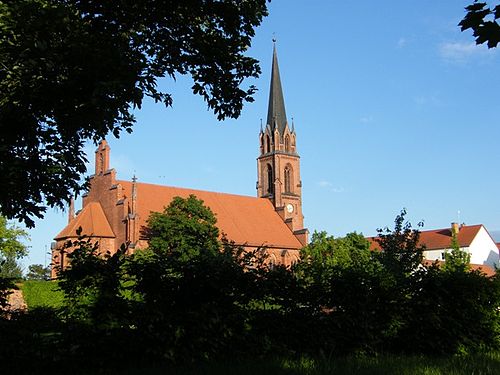
Guben is a town situated in the state of Brandenburg, Germany, near the border with Poland. It lies on the banks of the Neisse River, which serves as a natural boundary between Germany and Poland. With a population of around 17,000, Guben has a rich history that dates back to its founding in the 13th century. The town was initially established as a trading hub and has evolved over centuries as a center of commerce and industry. The architecture in Guben reflects its historical significance, comprising a mixture of Gothic, Renaissance, and modern buildings. Notably, the town features the historic St. Nicholas Church and remnants of its medieval town walls, which highlight its storied past.
The presence of the Neisse River not only enhances Guben's scenic beauty but also plays a significant role in its economic activities. Historically, Guben was an important center for glassmaking and textile manufacturing, contributing to the economic development of the region. Today, the economy has diversified; while manufacturing remains relevant, service industries and retail have gained prominence. Guben's location as a border town has facilitated cross-border trade with its Polish counterpart, Gubin, encouraging cultural exchange and cooperation between the two locales. The area's infrastructure supports easy access to larger urban centers, making Guben an attractive place for residents and businesses alike. With its blend of history, culture, and economic potential, Guben remains a unique and important town within Germany.
Facts about Guben
- Guben is a rare example of a town that straddles the border between Germany and Poland, with the Neisse River separating it from its Polish counterpart, Gubin.
- The city has a rich history dating back to the 13th century, with its establishment as a trade center evident in the medieval architecture still present today.
- Guben is known for its distinctive brick Gothic-style church, St. Augustine's Church, which showcases the unique architectural heritage of the region.
- In the 19th century, Guben was an important center for glass-making, leading to the establishment of several enterprises whose legacy can still be felt in the area.
- The town is home to a unique cultural event called 'Gubener Wassertage,' which celebrates the significance of water in the city and surrounding regions.
- Guben has a notable natural landscape, with several parks and green areas, including the scenic Neisse River promenade, ideal for walking and cycling.
- The city was heavily affected during World War II, resulting in significant destruction, but has since undergone extensive rebuilding and revitalization efforts.
- Guben participates actively in cross-border cooperation programs with Gubin, Poland, promoting cultural exchange and economic collaboration.
- A unique feature of Guben is its mixed cultural heritage, reflecting influences from both German and Polish history due to its position along the border.
- Guben is part of the European Route of Brick Gothic, attracting visitors interested in the unique architectural style found in this region of Northern Europe.