Guilin, China
- 1,572,300 people
- 10 places to visit
- 25.2736, 110.29
Places to Visit (10)
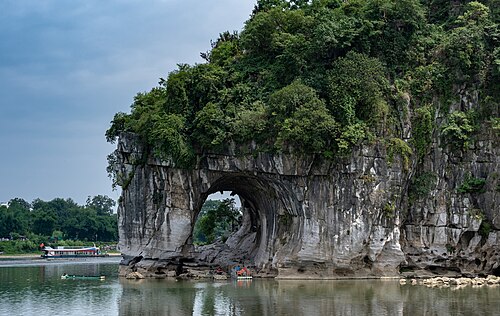
Guilin, located in the Guangxi Zhuang Autonomous Region of southern China, is renowned for its breathtaking landscapes, characterized by karst mountains, lush greenery, and winding rivers. The city, whose name translates to "Osmanthus Forest," has a population of approximately 1.3 million residents and serves as a key destination for both domestic and international tourists. It sits on the west bank of the Li River and is surrounded by unique limestone formations that rise dramatically from the earth, creating a striking visual that has inspired poets and artists for centuries.
A pivotal attraction in Guilin is the Li River, which flows southward towards Yangshuo, offering scenic river cruises that showcase the area's stunning karst scenery. The route features picturesque villages, terraced rice fields, and charming waterways. Tourists often embark on excursions to explore famous landmarks such as the Elephant Trunk Hill, which resembles an elephant drinking from the river, and the Reed Flute Cave, known for its impressive stalactites and stalagmites. Guilin is also rich in cultural heritage, housing the Seven Star Park, where visitors can enjoy traditional Chinese gardens, caves, and ancient relics. Additionally, the city is a gateway to many ethnic minority groups, particularly the Zhuang people, who maintain unique traditions and customs that enhance the multicultural fabric of the region.
Guilin’s climate is classified as humid subtropical, resulting in mild winters and hot, humid summers, making it an attractive destination year-round. The city has developed modern infrastructure, including an international airport and a network of high-speed trains, which facilitates easy access to other major Chinese cities. Gastronomically, Guilin is famous for its rice noodles (Guilin mifen), which are often served in savory broth with various condiments. Throughout the year, the city hosts various cultural festivals and events that showcase local arts, crafts, and cuisine, further enriching the visitor experience. Overall, Guilin stands out not only for its stunning natural beauty but also for its vibrant culture and history, making it a must-visit destination in China.
Facts about Guilin
- Guilin is renowned for its spectacular karst landscape, characterized by limestone peaks and steep cliffs, making it one of the most photographed locations in China.
- The Li River, which flows through Guilin, is famous for its picturesque views and is often cited as one of the most beautiful river routes in the world, attracting tourists for scenic cruises.
- Guilin has a rich cultural heritage, dating back over 2,000 years, and was an important city during various dynasties, including the Tang and Song dynasties.
- The Reed Flute Cave in Guilin is a remarkable limestone cave known for its stunning stalactites and stalagmites, and it has been a tourist attraction for over 1,200 years.
- Guilin hosts the annual Guilin International Tourism Festival, which showcases local culture through performances, parades, and food, drawing visitors from around the globe.
- The city is also notable for its prominent rice noodle dish, Guilin rice noodles (Guilin mifen), which have become a staple in local cuisine and popular throughout China.
- Guilin is home to the Sun and Moon Pagodas, located in the city center, which are iconic symbols of the city's cultural and architectural heritage.
- The Elephant Trunk Hill, featuring a rock formation resembling an elephant drinking water, is one of Guilin’s most famous natural landmarks and represents the spirit of the city.
- Guilin serves as a gateway to the Longsheng Rice Terraces, an impressive agricultural feat created by the local Zhuang and Yao ethnic minorities, known for their breathtaking views.
- The city has a significant number of ethnic minorities, including the Zhuang, Yao, and Dong people, contributing to its rich cultural diversity and unique festivals.