Guwahati, India
- 899,094 people
- 16 places to visit
- 26.1158, 91.7086
Places to Visit (16)
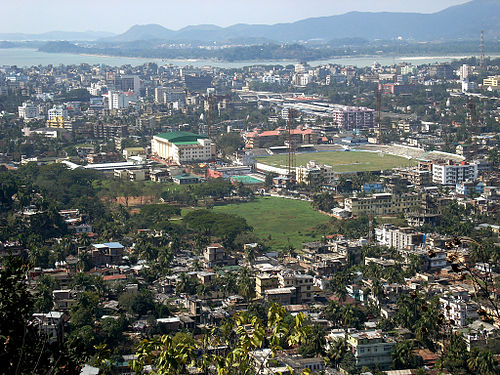
Guwahati, the largest city in the northeastern state of Assam, India, serves as an important cultural and economic hub in the region. Nestled on the southern bank of the Brahmaputra River, the city encompasses a diverse mix of communities and ethnicities, reflecting the rich historical and cultural tapestry of Northeast India. With a population exceeding one million, Guwahati acts as a gateway to the enchanting landscapes and varied cultures of the entire northeastern region. The city's strategic location serves not only as a commercial center but also as a vital junction for connectivity to the rest of Assam and other northeastern states.
The city is characterized by its vibrant cultural scene, featuring numerous temples, monuments, and festivals that attract visitors from far and wide. One of the key landmarks is the Kamakhya Temple, a revered Shakti Peeth dedicated to the goddess Kamakhya, which draws pilgrims and tourists alike. Guwahati is also home to the Assam State Museum and the Northeast Science Centre, which showcase the rich heritage and biodiversity of the region. The Brahmaputra River plays a crucial role in the city’s identity, offering recreational activities like river cruises and serving as a key shipping route. Guwahati’s economy relies on various sectors, including trade, education, tourism, and information technology, facilitating growth and development.
As a city steeped in history, Guwahati has witnessed significant transformations over the years, evolving from a regional trading post to a modern urban center. It is marked by a mix of traditional customs and contemporary lifestyle, with burgeoning infrastructure and educational institutions. However, Guwahati faces challenges, including urbanization issues, traffic congestion, and environmental concerns. Efforts are ongoing to address these problems while preserving the city's unique cultural identity. With its enchanting landscapes, historical importance, and economic potential, Guwahati remains a focal point of growth and diversity in India’s northeastern frontier.
Facts about Guwahati
- Guwahati is known as the 'Gateway to Northeast India' due to its strategic location that connects various northeastern states.
- The city is home to the famous Kamakhya Temple, a major pilgrimage site dedicated to the goddess Kamakhya, which draws thousands of visitors annually.
- Guwahati features the Brahmaputra River, one of the major rivers in India, which is vital for local trade, transport, and agriculture.
- It has a rich historical background, with archaeological sites indicating human habitation dating back to the 2nd century BCE, showcasing its ancient past.
- The city hosts the unique Bihu festival, which is celebrated with dance, music, and feasting, marking the Assamese New Year and the harvest season.
- Guwahati is known for its diverse wildlife, with the nearby Kaziranga National Park, a UNESCO World Heritage Site, famous for its population of the Indian one-horned rhinoceros.
- The Assam State Museum in Guwahati is one of the largest and oldest museums in the region, showcasing the history, culture, and heritage of Assam.
- Guwahati is also recognized for its vibrant tea culture, with many tea estates in the surrounding areas contributing to Assam's reputation as a leading tea producer.
- The city has been a center for education and research, housing several reputable institutions like the Indian Institute of Technology (IIT) Guwahati and Gauhati University.
- Guwahati's urban landscape is distinguished by the unique blend of modern development alongside traditional Assamese culture, evident in its architecture and lifestyle.