Gwalior, India
- 882,458 people
- 18 places to visit
- 26.2124, 78.1772
Places to Visit (18)
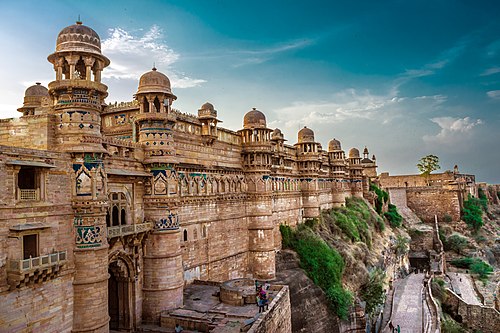
Gwalior is a historic city located in the central Indian state of Madhya Pradesh. Renowned for its rich cultural heritage and architectural marvels, it lies approximately 319 kilometers south of Delhi and serves as an important administrative and educational center in the region. Gwalior is characterized by its strategic position on the northern edge of the Malwa Plateau, making it a crucial point for various historical trade routes and interactions. The city boasts a fascinating blend of ancient history and modern development, contributing to its unique identity.
One of the most significant landmarks of Gwalior is the Gwalior Fort, reputed as one of the most invincible forts in India. The fort's history dates back to the 8th century and features a remarkable array of palaces, temples, and sculptures. Notable structures within the fort include the Man Mandir Palace, known for its intricate tile work and stunning architecture, and the Saas Bahu Temple, which showcases exquisite carvings dedicated to the worship of Vishnu. Besides the fort, Gwalior is home to other historical sites such as the tomb of Tansen, one of the greatest musicians in Indian history and a prominent figure of the Mughal era, and the Gujari Mahal, which reflects the Indo-Islamic architectural style.
Gwalior also plays an important role in contemporary education and industry. It houses several prominent educational institutions, including the Indian Institute of Information Technology and Management (IIITM) and the Gwalior Engineering College. The city's economy is supported by industries such as textiles, manufacturing, and tourism. Furthermore, the annual Gwalior Music Festival attracts artists and tourists from around the world, emphasizing Gwalior's long-standing connection with music and culture. Through its historical significance and modern developments, Gwalior stands as a testament to India’s diverse legacy and continues to captivate visitors with its charm and significance.
Facts about Gwalior
- Gwalior is home to the Gwalior Fort, a historic fortification dating back to the 8th century, known for its impressive architecture and rich history.
- The city has a unique blend of Hindu and Islamic architectural styles, exemplified in landmarks like the Saas Bai Ka Mahal and Gujari Mahal.
- Gwalior is known as the birthplace of Tansen, one of the nine gems of Emperor Akbar's court, and is famous for its contribution to Hindustani classical music.
- The city hosts the Gwalior Trade Fair, one of the largest trade fairs in India, showcasing regional crafts, industry, and culture every January.
- Gwalior was the seat of the Scindia dynasty, which played a significant role in the Maratha Empire and had a lasting impact on the city's culture and economy.
- The annual Tansen Music Festival celebrates the legacy of Tansen, attracting music enthusiasts from across the country to witness performances by renowned artists.
- Gwalior is often referred to as the 'Sigh of Gwalior' due to its majestic and historic structures that have stood the test of time.
- The city has the distinction of being one of the earliest urban centers in India, with archaeological evidence dating back to the prehistoric era.
- Gwalior is known for its traditional cuisines, particularly the sweet dish known as 'Gwalior ka Chaat' and its variety of street food.
- The Gwaliorian dialect of Hindi is distinct and reflects the rich cultural amalgamation of the various communities that have historically settled in the region.