Gyumri, Armenia
- 148,381 people
- 12 places to visit
- 40.7929, 43.8465
Places to Visit (12)
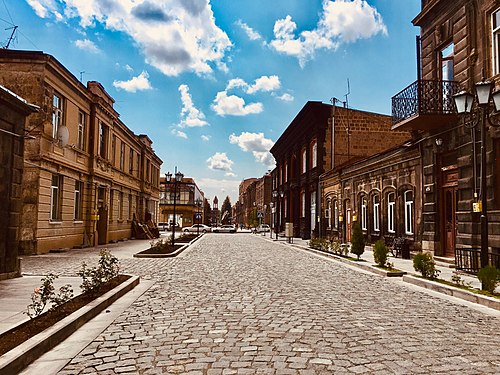
Gyumri, the second-largest city in Armenia, is located in the western part of the country, approximately 126 kilometers from the capital, Yerevan. The city sits at an elevation of about 1,400 meters and lies on the Araks River, near the Turkey-Armenia border. Gyumri's geographic location has made it a significant cultural and economic center throughout its history. The city is known for its rich heritage, characterized by its distinct architecture, primarily consisting of 19th-century buildings constructed from volcanic tuff. This unique style contributes to Gyumri's charm, with many structures showcasing intricate designs and deep historical significance. The city is also home to the prominent Black Fortress, which reflects its military past and the various influences that have molded it through centuries.
With a population of around 120,000 residents, Gyumri has a vibrant cultural scene that includes several theaters, museums, and art galleries. The city's annual festivals and events, such as the Gyumri Art Festival and the International Music Festival, attract both locals and tourists, celebrating Armenian culture and the arts. Notably, Gyumri has a significant place in Armenia's history, having been the epicenter of a devastating earthquake in 1988 that claimed tens of thousands of lives and left many others homeless. The disaster had a lasting impact on the city, prompting a major rebuilding process in the years that followed. Today, while still recovering from the scars of that tragedy, Gyumri is undergoing revitalization efforts, combining modernization with preservation of its historical character. As an important industrial hub, it contributes to the national economy, particularly in textiles, food production, and ceramics, while also fostering a sense of community resilience that showcases the spirit of its people.
Facts about Gyumri
- Gyumri is the second-largest city in Armenia and is known for its rich cultural heritage and unique architectural style, featuring a mix of neoclassical and traditional Armenian elements.
- The city is famous for its vibrant arts scene, particularly in theater and music, and hosts various cultural festivals, including the annual Gyumri International Film Festival.
- Gyumri was designated as a UNESCO World Heritage Site in 2019 for its historical significance and well-preserved architecture, making it distinct from many other cities in Armenia.
- The city is noted for the black-and-white basalt stone used in many of its traditional buildings, giving Gyumri a unique aesthetic compared to other towns in the country.
- Gyumri played a crucial role in the 1988 Spitak earthquake, which led to significant reconstruction efforts and a unique narrative of resilience and recovery in the city's history.
- The city's central square, Vartanants Square, is surrounded by several important buildings, including the iconic Church of the Holy Saviour, which distinguishes it from other urban centers in Armenia.
- Gyumri is also known for its culinary specialties, particularly traditional dishes that reflect a unique blend of Armenian, Turkish, and Georgian influences not commonly found in other parts of the country.
- The city has a significant number of museums, such as the Gyumri Museum of Contemporary Art, showcasing the rich local art scene that sets it apart from other cities.
- Gyumri was historically a major hub during the Russian Empire and served as a military base, which has influenced its development and demographic diversity over the years.
- It is also recognized for its unique dialect, Gyumri dialect, which includes local expressions and words that differ from standard Armenian, adding to the city's cultural uniqueness.