Hadera, Israel
- 97,335 people
- 9 places to visit
- 32.434, 34.9196
Places to Visit (9)
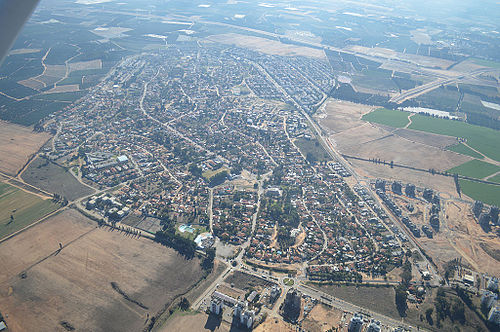
Hadera is a city located in the central coastal plain of Israel, situated approximately 30 kilometers south of Haifa and 50 kilometers north of Tel Aviv. Founded in 1891 by Jewish immigrants, it was one of the earliest modern settlements in the region, aiming to establish a Jewish agricultural community. The city’s name is derived from the nearby Hadera River, which flows into the Mediterranean Sea. Over the years, Hadera has evolved from a small agricultural town into a significant urban center, characterized by its diverse population and rich cultural life. It has gone through various developments, including industrialization and urban expansion, particularly from the 1950s onward, becoming an important hub for industry and commerce.
Today, Hadera embodies a mix of historical and modern influences, with a population of about 100,000 residents. The city is known for its green spaces, such as the Hadera Forest, which is part of a restoration project aimed at reforesting the area. Hadera's economy includes a strong industrial sector, particularly in energy production, with the power stations that dot its coastline being critical to Israel's energy infrastructure. The city also boasts several educational institutions, shopping centers, and cultural venues, such as theaters and galleries. Furthermore, Hadera is well-connected via major highways and railways, enhancing its accessibility to both the northern and southern parts of the country. The blend of its historical roots and modern advancements makes Hadera a notable city in Israel, contributing to the overall diversity and development of the region.
Facts about Hadera
- Hadera is known for its unique geographical location at the confluence of the Mediterranean Sea and the Hadera River, making it one of the few cities in Israel with direct river access to the sea.
- The city was founded in 1891 by Jewish immigrants from Europe, making it one of the earliest modern settlements established by the First Aliyah.
- Hadera is home to the largest industrial zone in Israel, known as the Hadera Industrial Zone, which hosts numerous factories and is a significant contributor to the country's economy.
- The city features the Hadera Water Park, one of the largest and most popular water parks in Israel, attracting both residents and tourists during the summer months.
- Hadera has a diverse population, with a mix of ethnicities including Jewish immigrants from Ethiopia, the former Soviet Union, and various European countries, creating a rich cultural tapestry.
- The city's coastline includes the famous Hadera Beach, known for its beautiful sandy stretches and recreational opportunities, distinguishing it from other nearby towns.
- Hadera is home to the historic Hadera Cemetery, where many notable figures from early Israeli history are buried, including key pioneers of Zionism.
- In recent years, Hadera has become a center for renewable energy, housing one of Israel's largest solar power plants, contributing to the country's sustainability goals.
- Hadera is also recognized for its rich agricultural surroundings, particularly its citrus orchards, contributing to Israel's reputation as a leading exporter of fruits.
- The city hosts various cultural and musical events, such as the annual Hadera Festival, which showcases local artists and fosters community engagement.