Halberstadt, Germany
- 39,729 people
- 9 places to visit
- 51.8916, 11.0489
Places to Visit (9)
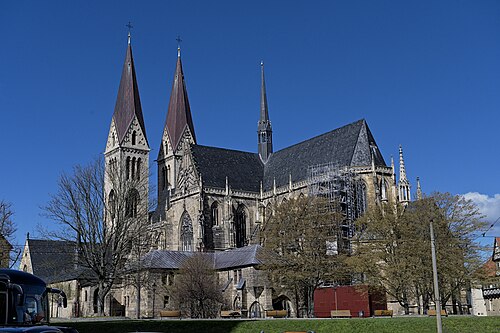
Halberstadt is a historic city located in the state of Saxony-Anhalt, Germany, with a rich heritage that dates back over a thousand years. The city, situated at the foot of the Harz Mountains, plays a significant role in the region's history and culture. It was officially founded in the 10th century and became an important center for trade and commerce due to its strategic location along the historic trade routes. Halberstadt gained prominence during the Middle Ages, becoming a bishopric and establishing itself as a key religious center, which is evident from its notable architecture, including the stunning Halberstadt Cathedral. This Romanesque cathedral, constructed between the 11th and 14th centuries, possesses two distinct towers and houses important architectural features as well as several notable works of art, making it a UNESCO World Heritage site.
The city suffered considerable destruction during World War II but has since undergone extensive restoration efforts. Today, Halberstadt is known for its well-preserved medieval buildings, charming old town, and vibrant cultural scene. Visitors can explore landmarks such as the ST. Martin's Church and the old town hall, which showcase impressive Gothic and Renaissance styles. Halberstadt is also notable for its musical heritage, having been the birthplace of the famous composer Heinrich Schutz and the location where the world-renowned "Halberstadt Chord" performance of John Cage’s "As Slow As Possible" began in 2001. The city now serves as a cultural hub, hosting various festivals and events that celebrate its historical significance and artistic heritage. Consequently, Halberstadt attracts numerous tourists each year, drawn by its blend of historical charm and modern cultural vibrancy.
Facts about Halberstadt
- Halberstadt is known for its remarkable medieval architecture, including St. Stephen's Cathedral, which features one of the largest collections of medieval stained glass in Germany.
- The city is home to the famous 'Halberstadt Clocks,' which gained international attention for the 'As Slow As Possible' performance that began in 2001 and lasts over 639 years, making it one of the longest performances in music history.
- Halberstadt was an important city during the Middle Ages, serving as a center for the bishops of Halberstadt and as a significant location for the spread of Christianity in the region.
- The city is located at the intersection of the historic Harz region and the fertile areas of the northern German plains, making it a significant trading hub throughout its history.
- Halberstadt has a unique claim to fame with its close association to the 'Brocken' mountain, the highest peak in northern Germany, which is just a short distance away and offers stunning views.
- The 18th-century building, the 'Bishop's Palace', is notable for its baroque architecture and serves as a testament to the city's ecclesiastical heritage.
- Halberstadt's town square is home to a striking blend of architectural styles, including Renaissance, Gothic, and Baroque, making it a visually diverse area.
- The city hosts the annual 'Halberstadt Music Festival,' which showcases classical music and attracts performers and audiences from around the world, celebrating its rich musical heritage.
- Halberstadt played a role in the Reformation, as it was a center for Protestant reformers due to its influential bishops who initially embraced the Reformation's teachings.
- The city has a notable connection to the composer Johannes Brahms, with several events and exhibitions dedicated to his life and works being held in Halberstadt.