Hameln, Germany
- 58,666 people
- 16 places to visit
- 52.1042, 9.3616
Places to Visit (16)
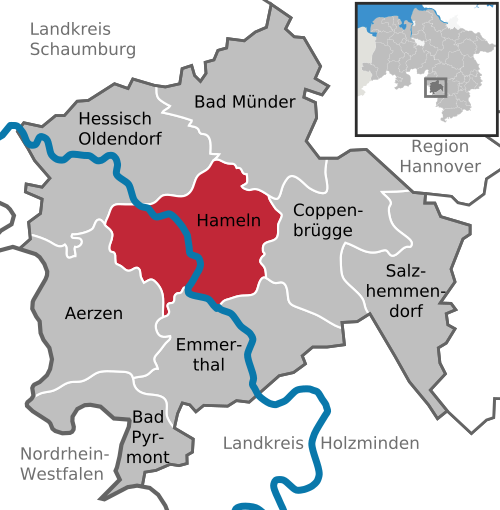
Hameln is a picturesque town located in Lower Saxony, Germany, known for its rich history and enchanting landscapes. It lies on the banks of the River Weser and is surrounded by the lush greenery of the Weser Uplands. The town has a population of approximately 58,000 residents and dates back to the medieval period, with its first mention recorded in 851 AD. Hameln flourished in the 13th century due to its strategic position along trade routes, which contributed to its development as a significant commerce hub. The ancient architecture reflects this vibrant history, with well-preserved half-timbered houses, narrow cobblestone streets, and notable buildings such as the Gothic-style Church of St. Boniface and the town hall, which showcases Renaissance elements.
Hameln is perhaps most famous for the legend of the Pied Piper, which originated in the town. The story recounts how a mysterious piper lured the town's rats away and, when not compensated for his service, led the children of Hameln away as retribution. This tale has spurred a variety of artistic interpretations, including the famous children's story by the Brothers Grimm, as well as numerous performances and events celebrating the legend. The annual Hameln Pied Piper Festival attracts visitors from around the globe, showcasing local traditions, music, and culture. In addition to its folklore, Hameln offers various recreational activities, such as hiking and cycling along the scenic Weser River, which boasts several designated paths for outdoor enthusiasts. The town's blend of history and culture, along with its charming natural surroundings, makes it a captivating destination for both tourists and residents alike.
Facts about Hameln
- Hameln is famously known for the legend of the Pied Piper, which is commemorated throughout the city and is a central part of its cultural identity.
- The city hosts an annual Rat Catcher Festival that celebrates the Pied Piper story with parades, performances, and market activities.
- Hameln boasts a well-preserved medieval old town, characterized by its half-timbered houses and beautiful architecture dating back to the 16th century.
- The Weser River flows through Hameln, and the city is part of the larger Weser Renaissance region, known for its unique architectural style.
- The Hameln Museum offers insights into the city’s history, including the impact of the Great Plague and the significant role of trade in its development.
- In 2017, Hameln was recognized as a UNESCO Creative City of Music, honoring its vibrant musical culture and contributions to the arts.
- Hameln serves as the administrative center of the district of Hameln-Pyrmont and has significant historical relevance in the region's governance.
- The city is strategically located near major transport routes, including the A2 motorway, linking it to larger cities like Hanover and Dortmund.
- Hameln has a unique historical event known as the 'Hameln spring', which signifies the city's historical floods and the community's resilience.
- The annual Christmas Market in Hameln is notable for its picturesque setting and traditional crafts, attracting visitors from across the region.